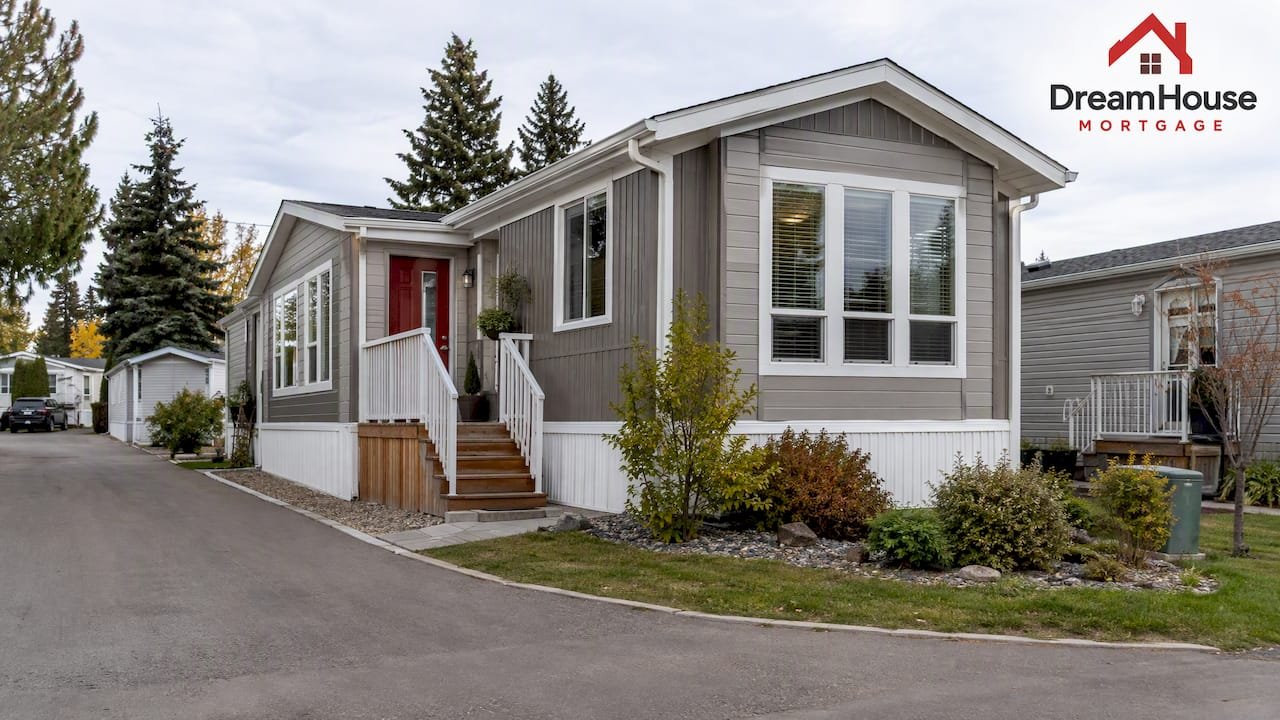
Rent vs Buy Calgary 2026: Full Guide to Making the Right Decision
Rent vs Buy Calgary 2026 — it’s the question on every Calgarian’s mind right now. With home prices softening, mortgage rates stabilizing, and rental vacancy rising, the calculus has genuinely shifted compared to the last few years. This guide breaks down the numbers, the Canadian mortgage rules, and the personal factors so you can make the right call for your situation.Whether you’re a first-time buyer weighing a downtown condo, a family eyeing a detached home in the suburbs, or a renter deciding whether to stay put another year — this is the most current, comprehensive breakdown you’ll find for Calgary in 2026.In This Guide
- Calgary Housing Market Snapshot — May 2026
- What It Costs to Rent in Calgary Right Now
- What It Costs to Buy in Calgary Right Now
- The Canadian Mortgage Perspective
- Rent vs Buy: The Numbers Side-by-Side
- When Renting Wins in Calgary
- When Buying Wins in Calgary
- Which Property Type Makes Sense in 2026?
- FAQ
- The Bottom Line
Calgary Housing Market Snapshot — May 2026
Calgary’s market in 2026 is best described as a tale of two cities — literally by property type. According to the Calgary Real Estate Board (CREB), the city is operating in a split market:- Detached homes are back in seller-friendly territory. Benchmark price: $741,300, down 3.3% year-over-year but climbing month-over-month. Supply sits at just 2.2 months — solidly in seller territory.
- Apartments/condos are under real pressure. Benchmark price: $300,300, down 9.3% year-over-year — the steepest segment-level drop in any major Canadian market tracked in 2026. Supply is at 4.6 months, giving buyers clear negotiating leverage.
- Townhouses/row homes sit in balanced territory at $423,900, down about 6% year-over-year.
What It Costs to Rent in Calgary Right Now
The rental market has loosened meaningfully. Calgary’s vacancy rate climbed from a very tight 1.4% in 2023 to approximately 4.6% in 2024–2025, driven by a wave of new purpose-built rental buildings — and vacancy is expected to approach 6% in 2026 as new supply continues to come online.Here’s what you can expect to pay monthly in Calgary in 2026:| Unit Type | Average Monthly Rent |
|---|---|
| Studio / Bachelor | ~$1,250–$1,400 |
| 1-Bedroom | ~$1,500 |
| 2-Bedroom | ~$1,900–$2,008 (inner city) |
| 3-Bedroom+ | ~$2,300–$2,600+ |
Compared to Vancouver (~$2,100 for a 2-bedroom) or Toronto (~$2,046), Calgary is considerably more affordable for renters. Combined with Calgary’s high average household income (~$168,400), the city offers the best rent-to-income ratio among Canada’s major cities.
Key renter advantage in 2026: With rising vacancy and more purpose-built supply, tenants have real negotiating power. Ask for incentives — a free month, parking, or appliance upgrades. Landlords are competing for tenants in a way they haven’t in years.Important Alberta rent rule: Alberta has no rent control. Landlords can raise rent by any amount, but only once every 12 months, with 3 months’ written notice. This is a key planning consideration for renters thinking about long-term cost certainty. This is also one of the main points to consider when doing Rent vs Buy Calgary 2026 analysis.What It Costs to Buy in Calgary Right Now
Let’s look at the true cost of buying across property types in Calgary in 2026. Note that “cost to buy” includes more than just the purchase price — you need to factor in the down payment, mortgage payments, property taxes, condo fees (if applicable), maintenance, and closing costs.| Property Type | Benchmark Price (Mar 2026) | Min. 5% Down Payment |
|---|---|---|
| Apartment/Condo | $300,300 | ~$15,015 |
| Townhouse / Row Home | $423,900 | ~$21,195 |
| Semi-Detached | $686,100 | ~$43,610* |
| Detached Home | $741,300 | ~$49,065* |
*For homes over $500K, Canada’s down payment rules require 5% on the first $500K and 10% on the portion above $500K. Homes over $1.5M require 20% down.
One major Calgary advantage over Toronto and Vancouver: There is no provincial land transfer tax in Alberta, saving buyers thousands at closing. Calgary’s closing costs are relatively minimal as a result.For the average detached home at $741,300, expect monthly carrying costs roughly as follows (20% down, 25-year amortization, 4.04% fixed rate):- Mortgage payment: ~$3,150/month
- Property tax: ~$350–$450/month
- Maintenance reserve (1% of value/year): ~$620/month
- Total estimated monthly cost: ~$4,120–$4,220
- Mortgage payment (on insured amount): ~$1,560/month
- Condo fees: ~$350–$550/month
- Property tax: ~$150–$200/month
- Total estimated monthly cost: ~$2,060–$2,310
The Canadian Mortgage Perspective
This is where the rent vs buy decision gets more complex in Canada — and in Calgary specifically. Understanding Canadian mortgage rules is essential before making any decision.Current Mortgage Rates in Calgary (May 2026)
- Best 5-year fixed rate: ~4.04% (insured, less than 20% down, 25-year amortization)
- Best 5-year variable rate: ~3.40%
- Bank of Canada policy rate: 2.25% (prime rate at ~4.45%)
- Rate outlook: Bond yields have climbed to the 3.2% range following dual rate holds from the Bank of Canada and US Federal Reserve. Upward pressure is growing under fixed rates. If you’re rate shopping, consider a pre-approval with a rate hold for up to 120 days.
Key Canadian Mortgage Rules That Affect Calgary Buyers in 2026
1. The Stress Test All Canadian mortgage borrowers — whether getting an insured or uninsured mortgage — must qualify at the higher of their contract rate + 2%, or 5.25%. At current rates, this means qualifying at approximately 6.04% on a fixed-rate mortgage. This stress test reduces your maximum purchase price and is a significant barrier for first-time buyers in Calgary.2. CMHC Mortgage Insurance (High-Ratio Mortgages)If your down payment is less than 20%, you need CMHC (or Sagen/Canada Guaranty) mortgage insurance. The premium is added to your mortgage:- 5–9.99% down: 4.00% premium on insured amount
- 10–14.99% down: 3.10% premium
- 15–19.99% down: 2.80% premium
How Much Mortgage Can You Qualify for in Calgary?
A household earning Calgary’s median income of approximately $99,000 can qualify for roughly a $425,000 mortgage — enough to purchase a benchmark condo or townhouse, but a detached home is increasingly out of reach on a single median income. Dual-income households in higher earning brackets have meaningfully more options.Rent vs Buy: The Numbers Side-by-Side
Let’s compare directly for a typical 2-bedroom scenario in Calgary in 2026:| Factor | Renting (2-Bed) | Buying (Condo) |
|---|---|---|
| Monthly Housing Cost | ~$1,900–$2,000 | ~$2,060–$2,310 |
| Upfront Cash Required | First + last month (~$3,800–$4,000) | Down payment + closing costs ($20,000–$30,000+) |
| Equity Building | None | Yes — every payment reduces principal |
| Price Appreciation Upside | None | Yes (Calgary CAGR ~4.8% since 2005) |
| Flexibility | High — can move with 60–90 days notice | Low — selling costs ~4–5% of price |
| Maintenance Responsibility | Landlord’s problem | Yours (budget ~1% of value/year) |
| Rent/Price Uncertainty | Rent can rise — no AB rent control | Fixed-rate mortgage = payment certainty |
| Tax Advantages | None | Principal residence exemption (no capital gains tax on sale) |
When Renting Wins in Calgary in 2026
Renting is the smarter choice in Calgary right now if any of these describe you:You’re planning to stay less than 3–5 years. The break-even point for buying vs renting in Calgary, accounting for buying/selling transaction costs (typically 4–5% of price) and the opportunity cost of the down payment, is generally 4–5 years. If there’s any chance you’ll leave Calgary — for work, family, or lifestyle — renting preserves optionality.You’re eyeing a condo specifically. Apartment benchmarks are down 9.3% year-over-year, and supply is at multi-year highs. Buying a Calgary condo right now means purchasing into a segment with real downward price pressure, rising special assessments as buildings age, and increasing competition from new purpose-built rentals that are keeping rents low. The math does not clearly favour buying a condo over renting one in 2026.Your down payment isn’t ready yet. A forced, underprepared purchase — especially with less than 10% down in a softening market — exposes you to being underwater if prices decline further. With the stress test, rising condo fees, and CMHC premiums, renting while building your FHSA and saving aggressively is often the stronger financial move.You value flexibility and your career is in flux. Calgary’s economy still has meaningful exposure to oil and gas volatility. If your income is variable or there’s uncertainty in your sector, the stability of renting (no selling costs, no maintenance surprises, no mortgage) is worth more than it looks on paper.When Buying Wins in Calgary in 2026
Buying makes sense in Calgary right now if:You’re buying a detached or semi-detached home and planning to stay 5+ years. These segments remain in seller’s territory with limited supply. Calgary’s long-term CAGR is 4.8% since 2005. With no land transfer tax, lower prices than Toronto/Vancouver, and strong population inflows still supporting demand, a detached home purchase at current prices with a solid down payment is a reasonable long-term wealth-building move.You have 10–20% saved and a stable dual income. The stress test hits hardest at the margin. With a larger down payment, lower stress-tested rate sensitivity, and dual income qualifying, you have meaningfully more stability and purchasing power. This group has the most to gain from current conditions.You’re a first-time buyer who has maxed your FHSA. If you have $40,000 in an FHSA and an additional amount in the Home Buyers’ Plan (up to $60,000 from RRSP), you’re in an exceptional position — you’re buying with tax-advantaged dollars. This fundamentally changes the rent vs buy math in your favour.You want payment certainty. With a 5-year fixed mortgage, your payment is locked for 5 years regardless of what the rental market does. Alberta’s lack of rent control means your rent could jump significantly at renewal. Over a 10-year horizon, ownership locks in a predictable baseline cost.You want to build generational equity in Canada’s second-strongest job market. Calgary has Canada’s highest average household incomes and one of the lowest unemployment rates. Long-term population growth (3.4% annualized over 5 years) supports underlying housing demand. Real estate in Calgary has historically outpaced inflation over the long term.Which Property Type Makes Sense in 2026?
Not all property types are equal in this market. Here’s how each stacks up for buyers in 2026:Apartments / Condos — Buyer Caution Warranted Prices are down 9.3% year-over-year and supply is at the highest level since the last financial crisis. New purpose-built rentals are competing with condo owners directly. If you’re buying a condo as an investment, cap rates are under pressure. If you’re buying to live in, wait for prices to stabilize or negotiate hard — there’s meaningful room to do so.Townhouses / Row Homes — Balanced and Reasonable Down ~6% year-over-year but stabilizing. Townhouses offer a middle ground — lower than detached, no elevator or shared amenity costs, often in family-friendly areas. Supply is at 3.0 months (balanced). This is arguably the best value segment for first-time buyers who need more space than a condo but can’t stretch to detached.Semi-Detached — Good Value Play Down ~0.9% year-over-year and holding up relatively well. Lower entry point than detached, with similar land appreciation dynamics and fewer condo complications. Worth serious consideration for buyers with $550,000–$700,000 budget.Detached Homes — Still Tight, Still the Long-Term Winner Supply at just 2.2 months. Month-over-month prices are climbing even as year-over-year comparisons look slightly negative. If you can afford a detached home in Calgary — especially in established communities — it remains the strongest long-term real estate position. The challenge is affordability: median-income households generally cannot qualify for detached homes without substantial equity or dual high incomes.Frequently Asked Questions — Rent vs Buy Calgary 2026
Is it better to rent or buy in Calgary in 2026?
It depends on your timeline and finances. Buying a detached or semi-detached home makes sense if you’re staying 5+ years and have adequate savings. Renting is smarter for condos, short stays, or if your savings aren’t ready yet. With vacancy near 4.6–6%, renters have more leverage than in years.What is the average home price in Calgary in 2026?
Calgary’s average home price as of March 2026 is approximately $641,844. Detached homes average $808,924; townhouses $449,446; apartments $344,063. Benchmark prices (more reliable for tracking trends) are: detached $741,300, townhouses $423,900, apartments $300,300.What are current mortgage rates in Calgary in 2026?
As of late April/May 2026, the best 5-year fixed rates start at approximately 4.04% and the best 5-year variable rates at approximately 3.40%. Bond yields have been rising, putting upward pressure on fixed rates. Secure a rate hold of up to 120 days if you’re planning to buy soon.What is the average rent in Calgary in 2026?
A 1-bedroom averages approximately $1,500/month. A 2-bedroom averages $1,900–$2,008/month (higher in the inner city). Rents have softened from 2023–2024 peaks due to rising vacancy and new rental supply.Does Alberta have rent control in 2026?
No. Alberta has no rent control. Landlords can increase rent by any amount, but only once per 12 months with 3 months’ written notice. This is an important risk for renters relying on stable long-term rent costs.What is the stress test and how does it affect Calgary buyers?
Canada’s mortgage stress test requires you to qualify at your contract rate + 2% (or 5.25%, whichever is higher). At a 4.04% fixed rate, you qualify at roughly 6.04%. This reduces your maximum purchase price and is why many buyers find detached homes out of reach at median incomes.What first-time buyer programs are available in Canada for Calgary buyers?
The First Home Savings Account (FHSA) allows up to $8,000/year tax-deductible contributions (lifetime max $40,000) with tax-free withdrawals for a qualifying purchase. The Home Buyers’ Plan lets you borrow up to $60,000 from your RRSP. The First-Time Home Buyers’ Tax Credit provides a $10,000 non-refundable credit ($1,500 in tax relief). Alberta also has no land transfer tax — a significant savings compared to other provinces.The Bottom Line: Rent vs Buy Calgary 2026
There is no single right answer to the rent vs buy question in Calgary in 2026 — but there are clear signals for different situations.Rent if: you need flexibility, are eyeing a condo, plan to stay fewer than 4–5 years, or your financial foundation (down payment, stress-test qualification, emergency fund) isn’t solidly in place yet. The rental market has meaningfully improved for tenants — vacancy is up, rents are stable or declining, and you have real negotiating power.Buy if: you’re buying a detached or semi-detached home, have 10–20% down, plan to stay 5+ years, and have fully utilized first-time buyer programs. Calgary’s long-term fundamentals — strong population growth, high incomes, no land transfer tax, and a resilient economy — still make ownership a sound long-term strategy.The nuanced reality for 2026: this is the best buyer’s market Calgary has seen in several years. Prices are negotiable, inventory is up, and the desperation of 2022–2023 is gone. If your finances are ready, the window is open. But don’t let urgency rush an underprepared purchase — especially in the condo market, where price pressure is real and ongoing.Have questions about qualifying for a mortgage in Calgary or running your personal numbers? Speaking with a licensed, independent mortgage broker — ideally one who works with multiple lenders — is the best first step. Every situation is different, and personalized advice matters more than general rules of thumb.Ready to Run Your Numbers?
Whether you’re buying, renting, or still deciding — Guriqbal Chahal, MBA, PMP, Mortgage Broker at Dreamhouse Mortgage, can walk you through your options, qualification power, and the best mortgage strategy for your situation in Calgary’s 2026 market.
Explore Calgary rentals and real estate listings:
- www.dreamhouse.rentals — Get more Calgary rental insights
- www.dreamhouse.realty — Search Calgary homes for sale
Get a free mortgage consultation today and find out exactly where you stand before making one of the biggest financial decisions of your life.
Disclaimer: This article is for informational purposes only and does not constitute financial, mortgage, or legal advice. Data current as of May 2026. Always consult a licensed mortgage professional and financial advisor before making real estate decisions.