
Yes, you can get a mortgage during a consumer proposal, but your realistic choices depend heavily on timing. Private lenders and select B-lenders will consider you now, using equity and income rather than a clean credit report. A-lenders and insured mortgages through CMHC generally stay off the table until two years after your discharge, so the honest trade-off is between paying a higher rate sooner or waiting for prime pricing.
TL;DR:
- Private lenders and mortgage investment corporations are the only realistic options during an active proposal, focusing on equity rather than credit scores.
- Most B-lenders become accessible 12 to 24 months after completing your consumer proposal, and saving a 20% down payment is often required to qualify for insured mortgages.
- Renewals with your current lender are typically straightforward if payments were kept current, but switching lenders or refinancing before the two-year post-discharge mark is much harder.
- Rebuilding credit can take two to three years with disciplined payments and small tradelines, gradually improving your score to qualify for prime lenders.
- Securing your Certificate of Full Performance from your trustee is the top priority, as most lenders won’t consider new financing until this document is obtained.
Table of Contents
- Which Lenders Will Consider You, and When?
- Can You Renew, Switch, or Refinance During a Proposal?
- How to Rebuild Credit and What Documents You’ll Need
- Down Payment Rules and the CMHC Two-Year Restriction
- Renewal or Refinance: Running the Real Numbers
- Your Step-by-Step Path to Prime Lending
- How DreamHouse Mortgage Places Post-Proposal Files
- What the Conventional Advice Gets Wrong
- Talk to a Calgary Mortgage Broker Before You Apply
- Sources
- FAQ
Which Lenders Will Consider You, and When?
The mortgage market splits into tiers, and each one treats an active or recently completed consumer proposal differently. Understanding where you fit right now saves you from wasted applications and rejected credit checks that can bruise your file further.
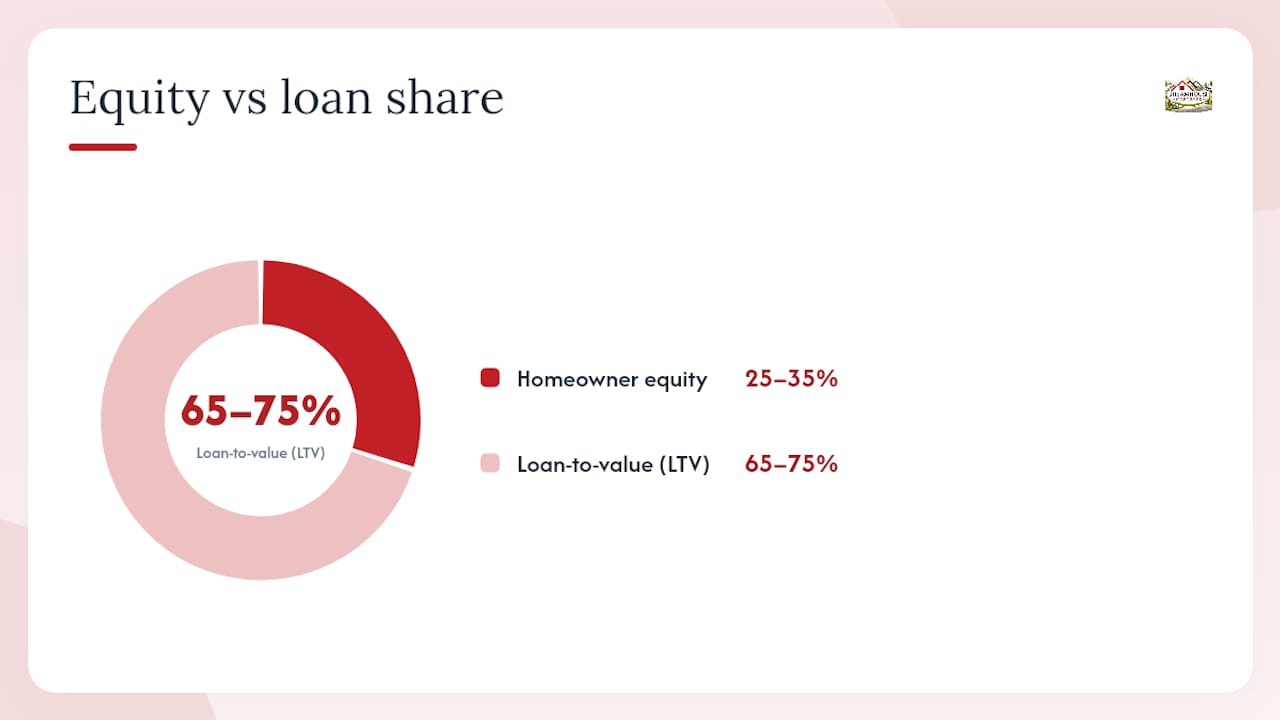
Private lenders and Mortgage Investment Corporations (MICs) are usually the only realistic option while your proposal is still active. These lenders underwrite primarily on the property’s equity position rather than your credit bureau file. If you own a home with 25 to 35 percent equity, a private lender or MIC can often structure a short-term mortgage, typically at a loan-to-value in the 65 to 75 percent range, with rates running noticeably higher than posted bank rates. These are bridge products, not forever mortgages. You use them to solve an immediate problem, then plan your exit.
B-lenders, which include many trust companies and alternative lending divisions, tend to open their doors 12 to 24 months after your proposal is fully completed, not from the filing date.
Credit unions and monoline lenders sit in an interesting middle ground. Alberta credit unions often underwrite manually and can look at your full financial picture rather than relying on a rigid score cutoff, which sometimes gets a borderline file approved when a big bank would decline it outright. Monoline lenders (mortgage-only lenders that work through brokers) vary widely case by case.
A-lenders and insured mortgages are governed by a firmer rule. CMHC, Sagen, and Canada Guaranty all apply a similar standard: they generally will not insure a new mortgage until about two years have passed since your insolvency was resolved. That two-year marker is the single biggest gatekeeper in this entire process.
- Private/MIC: available during an active proposal; equity-based; higher rates, short-term structure
- B-lender: typically 12 to 24 months post-completion; 20%+ down; mid-500s to low-600s credit score
- Credit union/monoline: case-by-case, manual underwriting, varies by institution
- A-lender/insured: roughly 2 years post-discharge; competitive rates; requires rebuilt credit
Every tier ultimately comes down to file quality. Two borrowers with identical proposals can get very different offers depending on income stability, savings discipline, and how clean the paperwork is.
Can You Renew, Switch, or Refinance During a Proposal?
Your existing mortgage and a brand-new application are treated very differently by lenders, and knowing the distinction saves you from a lot of wasted phone calls.
- Renewing with your current lender is almost always the smoothest path. If you have kept your mortgage payments current throughout the proposal, most lenders will renew you at maturity without a full new-application underwrite. This is often true even at big banks, because renewals typically do not trigger the same credit review as a purchase or a switch.
- Switching to a new lender during an active proposal is much harder. A new lender treats you like a fresh applicant, which means a credit pull, income verification, and, for insured products, running straight into the two-year insurer restriction.
- Refinancing to pay out the proposal can make sense if you have enough home equity, but it needs a real cost comparison, not a gut decision. Some lenders will allow a refinance specifically structured to settle the proposal balance in full, which can be worthwhile when the savings on interest and fees outweigh the refinance costs.
At each stage, lenders will ask for specific paperwork. During an active proposal, expect to provide proof of on-time payments to your Licensed Insolvency Trustee, recent bank statements, and current income documents. After discharge, the document lenders care about most is your Certificate of Full Performance, issued by your Licensed Insolvency Trustee once you’ve completed every payment. Without it, most B-lenders and all A-lenders will pause your file until it arrives.
A refinance-to-pay-out strategy tends to work best for homeowners in Calgary, Airdrie, or Cochrane who bought years ago and have built substantial equity through appreciation and paydown, not for someone who purchased recently with a small down payment.
How to Rebuild Credit and What Documents You’ll Need
Credit rebuilding after a consumer proposal follows a fairly predictable path if you’re consistent about it. Most Canadians who stay disciplined with new tradelines and on-time payments see meaningful score recovery within 6 to 24 months, often reaching the 650 to 700 range within two to three years.
Start these habits immediately, even before your proposal is finished:
- Open a secured credit card and use it lightly, never above 30% of the limit
- Add one or two additional tradelines (a small installment loan or a second secured card) once the first is established
- Pay every bill on time, every single month, without exception
- Avoid applying for multiple credit products in a short window, since each hard inquiry dings your score
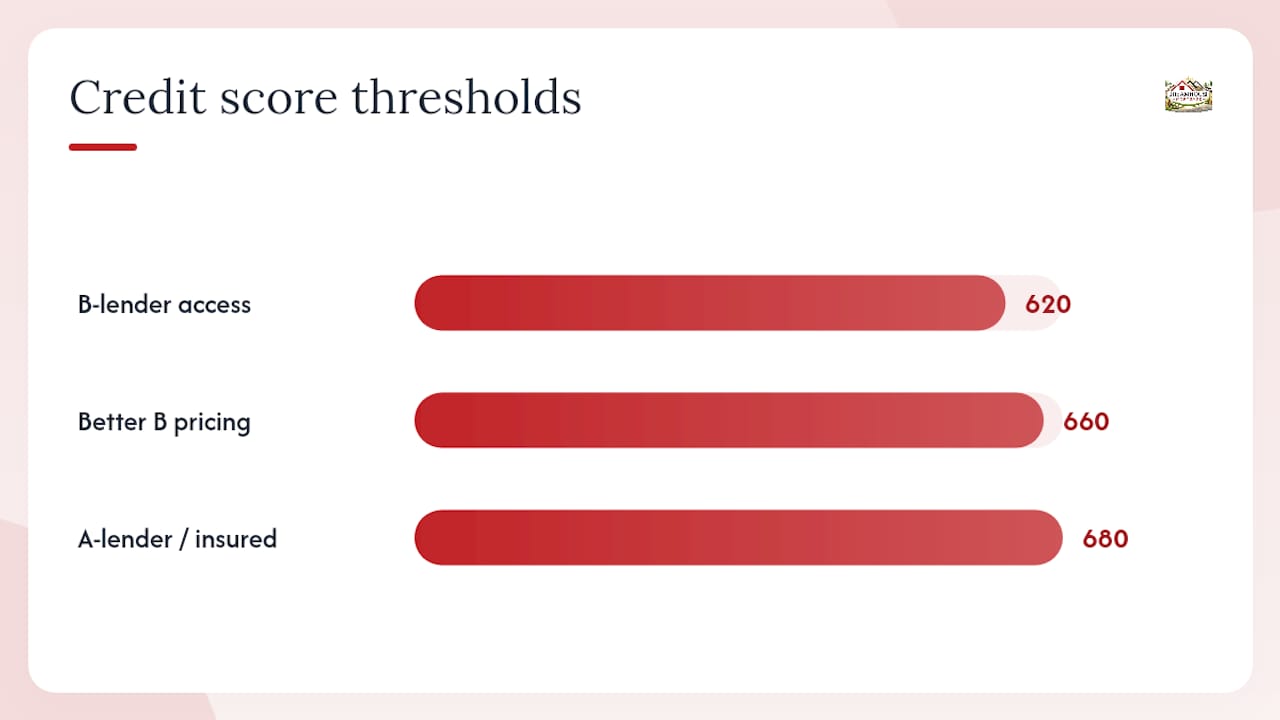
Score targets matter because they map directly to lender tiers. A 620 score typically opens conversations with more flexible B-lenders. A 660 score puts you within reach of better B-lender pricing and some credit union products. A 680 or higher, combined with your two-year insurer clock having run out, puts A-lender and insured financing back on the table.
When you’re ready to apply, lenders will want to see:
- Your Certificate of Full Performance from your Licensed Insolvency Trustee
- Current credit bureau reports from both Equifax and TransUnion
- Proof of income, including T4s and Notices of Assessment
- Recent bank statements showing savings patterns
- Documentation for your down payment source
Pro Tip: Pull your own credit reports from both bureaus before a lender does. If you spot an error, the Financial Consumer Agency of Canada outlines exactly how to dispute it, and fixing a mistake yourself is faster than waiting for a lender’s underwriter to flag it.
Down Payment Rules and the CMHC Two-Year Restriction
The problem is that these insurers share a similar policy: they generally won’t insure a mortgage until roughly two years have passed since the insolvency was resolved. That single rule is why most post-proposal borrowers need a much larger down payment than the standard minimum.
Until that two-year window closes, you’re generally working with conventional, uninsured financing, which is where the common 20% down-payment figure comes from. Below that threshold, most lenders simply won’t have an insurer willing to back the loan.
If you don’t have 20% saved, you still have paths forward:
- A private lender bridge mortgage on strong equity, used temporarily while you rebuild
- A B-lender mortgage with the 20%+ down payment, accepting a higher rate for one or two years
- A properly documented gifted down payment from an immediate family member, with a signed gift letter
Whichever route you take, document your down payment source carefully. Lenders and FINTRAC compliance checks both scrutinize large deposits that appear suddenly in your account without a clear paper trail, and an undocumented deposit can delay or derail an otherwise solid application.
Renewal or Refinance: Running the Real Numbers
Deciding between renewing, refinancing to pay out the proposal, or waiting comes down to comparing actual dollar figures, not gut instinct.
- Check your current lender’s renewal offer first. If your payments have stayed current, this is typically the path of least resistance and the least paperwork, since most lenders won’t re-underwrite a renewal the way they would a new purchase or switch.
- Calculate the true cost of refinancing to pay out your proposal. Add up the new interest rate difference, lender fees, appraisal costs, and any prepayment penalty on your existing mortgage, then compare that total against the interest and fees you’d otherwise pay finishing the proposal on schedule.
- Weigh a short-term private mortgage against waiting. Private and MIC products typically carry higher rates and lender fees, so they only make sense with a clear exit plan, usually refinancing into a B-lender or A-lender product once your credit and timeline improve.
- Run the numbers before you commit to any option: prepayment penalty owed, new interest cost plus fees, and the net cash available to pay toward the proposal balance.
For many Calgary homeowners, the smartest move is simply renewing quietly with the current lender while the credit-rebuild clock runs in the background.
Your Step-by-Step Path to Prime Lending
A realistic roadmap keeps you from feeling stuck, and it gives you concrete milestones instead of vague hope.
- Right now: Contact your Licensed Insolvency Trustee to request your Certificate of Full Performance the moment your final payment clears. Order your credit reports from both Equifax and TransUnion, and open a secured credit card if you haven’t already.
- Months 3 to 12: Add a second tradeline, keep utilization under 30%, and start systematically saving toward a 20% down payment. Document every deposit, especially gifted funds, as they arrive.
- Months 12 to 36: Push your score toward 660 or higher, speak with a mortgage broker about B-lender options in the meantime, and mark your calendar for the 24-month post-discharge date when CMHC-insured financing becomes realistic again.
Pro Tip: Keep a simple spreadsheet tracking your discharge date, your current credit score from each bureau, and your savings toward down payment. When you eventually call a broker, having these numbers ready can cut weeks off the process.
Know who to call at each stage: your Licensed Insolvency Trustee for discharge paperwork, the credit bureaus for your reports, and a mortgage broker once you’re within a year of your target lender tier.
How DreamHouse Mortgage Places Post-Proposal Files
Dreamhouse Mortgage works across banks, credit unions, B-lenders, and private lenders throughout Calgary, Airdrie, and Cochrane, which matters because a broker who understands B-lender and credit union appetite can often place a file faster and more affordably than approaching a single bank directly.
Consider two common scenarios.
A file’s strength rarely comes down to one factor. It’s the combination of on-time payments during the proposal, a clean documentation trail, and realistic expectations about which lender tier fits the calendar you’re actually on.
An experienced mortgage broker with a decade of experience has guided Alberta borrowers through this kind of staged lending path.
What the Conventional Advice Gets Wrong
Most articles on this topic treat the two-year CMHC rule as the whole story, and that’s a mistake. The insurer restriction is real and it matters, but treating it as the finish line ignores the fact that private and B-lender options exist well before that date, and that renewing your existing mortgage often requires no new underwriting at all.
The bigger error I see Alberta borrowers make is waiting passively for the calendar to move instead of actively building their file. Lenders read the whole file, not just the score.
If there’s one thing to prioritize first, it’s getting your Certificate of Full Performance the day you’re eligible. Nothing else in this process moves until that document exists, and too many people let it sit for months out of simple inertia.
— Guriqbal Chahal, MBA, PMP
Talk to a Calgary Mortgage Broker Before You Apply
Mortgage brokers can give post-proposal borrowers access to private lenders, B-lenders, credit unions, and A-lenders all compared side by side, so clients aren’t stuck with whatever one institution decides to offer them.
Whether you’re a first-time buyer in Calgary trying to figure out your realistic timeline, a Cochrane homeowner weighing a refinance to pay out your proposal, or an Airdrie family approaching the two-year mark, Dreamhouse Mortgage builds a lender-tier plan around your actual file, not a generic script. Services include mortgage pre-approval, debt consolidation strategies, credit-rebuild guidance, and renewal or refinance planning for homeowners across Calgary, Airdrie, and Cochrane.
Call Guriqbal Chahal, MBA, PMP, Mortgage Broker, at 403-966-6072, or visit the Dreamhouse Mortgage Google Business Profile to book a consultation. On that first call, expect a quick document checklist, an honest assessment of which lender tier you’re likely to qualify for today, and a clear next step, whether that’s applying now or setting a target date to revisit your file.
Sources
- Calculating GDS and TDS — CMHC
- Mortgage After a Consumer Proposal: Lender Tiers, Real Timelines, and the File Quality Test — CollectorHQ
This article is general information, not a substitute for advice from a qualified financial advisor. Consult a qualified financial professional about your own circumstances before acting on anything here.
FAQ
Does RBC Accept Consumer Proposals?
Major Canadian banks, including RBC, generally follow the same insurer-driven timelines as other A-lenders, meaning they typically wait until roughly two years post-discharge before considering an insured mortgage application. During an active proposal or shortly after, private lenders, B-lenders, and credit unions are usually the more realistic options.
Will I Lose My House if I Do a Consumer Proposal?
No, filing a consumer proposal does not require you to sell your home, and your existing mortgage can generally continue as long as you keep making payments. Renewing with your current lender at maturity is typically allowed and rarely triggers a new credit review.
What Is the 2-2-2 Rule for a Consumer Proposal?
There’s no official “2-2-2 rule” defined by the Office of the Superintendent of Bankruptcy or CMHC; if you’ve seen this term, it likely refers informally to the roughly two-year windows that appear at several stages, such as the two-year mark before insured mortgage eligibility returns. Treat any specific “2-2-2” claim with caution and confirm timelines directly with a broker or your Licensed Insolvency Trustee.
What Should I Avoid Before Filing a Consumer Proposal?
Avoid taking on new debt, missing payments, or making large undocumented transfers in the months before filing, since these can complicate your proposal and raise flags with lenders later. It’s also wise to speak with a Licensed Insolvency Trustee and, if you own property, a mortgage broker like Dreamhouse Mortgage before filing so you understand how it will affect your specific mortgage situation.
How Long Does a Consumer Proposal Stay on My Credit Report?
A consumer proposal typically stays on your credit report for three years after the completion date or six years from the filing date, whichever comes first. This timeline is why the Certificate of Full Performance and disciplined credit rebuilding both matter so much for reaching prime lending sooner.
Recommended
- Bad Credit Mortgage Calgary: Shocking Truths, 3 Powerful Options & Real Approval Paths
- 5-Year vs. 3-Year vs. 2-Year Mortgage Term Comparison Alberta: The Ultimate 2026 Winner
- Newcomer Mortgage Calgary: The Ultimate 2026 Guide for New to Canada Mortgage borrowers to Buy a Home Faster
- Best Mortgage Rates Calgary Alberta Today (2026): A Powerful Guide for First‑Time Buyers and Investors