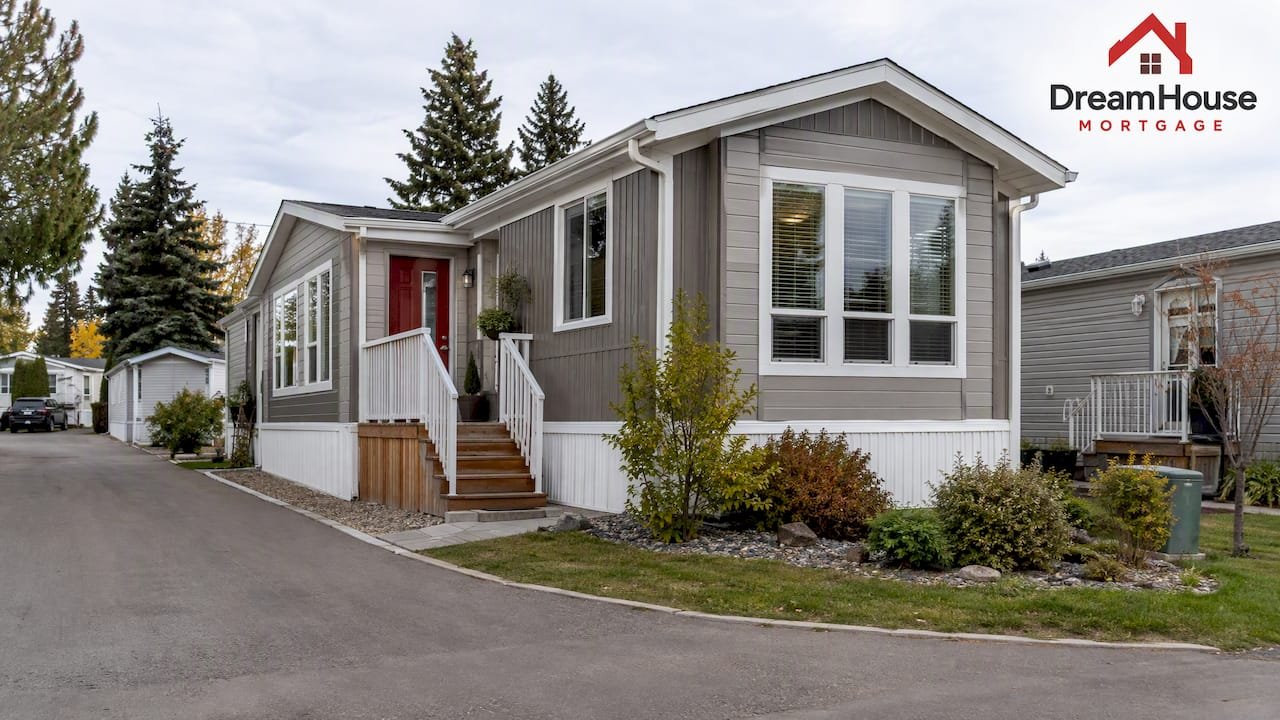
If you are looking to buy a rental property in Edmonton, you need a mortgage that fits your investment goals. The right loan can make or break your cash flow. But finding the best rates and terms for an investment property is not as simple as getting a mortgage for your own home. Lenders see more risk, so they charge higher rates and demand bigger down payments. That is why you need to compare your options carefully.
In this guide, we break down the best property and best investment property mortgage Edmonton rates. We look at big banks, credit unions, private lenders, and alternative lenders. Our top pick is DreamHouse Mortgage, a local brokerage that gives you access to over 50 lenders and charges no broker fee. We will also share tips on how to qualify and what to watch out for. Let us start.
1. DreamHouse Mortgage , Our Top Pick for Alberta Investors
DreamHouse Mortgage stands out because it offers transparency and choice. Based in Calgary, this brokerage serves all of Alberta, including Edmonton, Airdrie, Cochrane, Chestermere, Red Deer, and Okotoks. They require a 20% minimum down payment for investment properties, which is standard. But what sets them apart is that the broker fee is free to you. The lenders pay the commission. That saves you thousands upfront.
They also give you access to more than 50 lending partners. That means you are not stuck with one bank’s rules. Whether you need a fixed rate, variable rate, or a mortgage for a multi-unit property, they can find a lender that fits. Many investors do not realize that a brokerage can often beat the big banks on rate and service.
Another big plus: DreamHouse Mortgage’s website clearly explains the qualification rules. They talk about rental income calculations and the stress test. Many competitors hide these details. With DreamHouse Mortgage, you know what you need before you apply.
For example, if you want to buy a duplex in Calgary’s Beltline neighbourhood or a single-family rental in Airdrie, you need a mortgage that counts part of the future rent as income. DreamHouse’s brokers know how to present your file to get the best rate. They work with lenders that specialize in investment properties.
So if you want a smooth process with no hidden fees, DreamHouse Mortgage is your best bet. Start your pre-approval online today.
2. Big Banks Fixed Rates for Investment Properties
Canada’s big banks are a common starting point for mortgages. They offer stability and branch access. But for investment properties, their rates are usually higher than what you can get through a broker. They also have strict rules.
Major banks all offer fixed-rate mortgages for rental properties. Typically, you need at least 20% down. They will stress test you at the higher of the contract rate plus 2% or 5.25%. That can make it hard to qualify, especially if you already have a mortgage on your own home.
One major bank has a helpful article on purchasing an investment property. They explain that you can tap into your home equity using their home equity plans. That can help with your down payment. But the rates are not always the best.
The big banks also add a premium for rental properties. For example, if their posted 5-year fixed rate is 4.99%, you might get offered 5.24% for an investment property. That extra quarter point adds up over time.
One advantage is the ability to prepay up to 15% each year without penalty. That can help you pay down the mortgage faster. But you can find similar flexibility with other lenders.

Overall, big banks are reliable but pricey for investors. You may get a better deal by working with a broker who can shop among multiple lenders, including the banks themselves.
3. Credit Unions: Local Options with Flexible Terms
Credit unions are member-owned and often offer lower rates and more flexible terms than big banks. In Alberta, two local options stand out: one provincial crown corporation and one large credit union.
One is a provincial crown corporation that operates only in Alberta, so it understands the local market. It publishes its mortgage rates online. For a 5‑year fixed conventional mortgage (20% down or more), the posted rate as of June 2026 is around 4.56% APR. That is competitive. But for rental properties, it adds a premium of 0.50% per year. So you would pay about 5.06% initially. Check the official mortgage rate page for current numbers.
Another large credit union in Alberta offers a Profit Share program that gives you cash back that goes directly to your mortgage principal. For a $500,000 mortgage, you might get $750 per year. That is like getting a lower rate. They also have branches across Edmonton.
Both of these credit unions allow you to prepay more than the big banks. The crown corporation lets you renew 90 days early and port your mortgage. The credit union offers a 10% discount on a local community centre membership, which is a small perk for investors who live nearby.
Credit unions are great if you want a personal relationship and lower fees. They may also be more willing to work with self‑employed borrowers. But they still require a stress test and a 20% down payment for investment properties.
4. Private Lenders for Quick Closings in Edmonton
Sometimes you need to close a deal fast. Maybe you found a fixer-upper at auction. Maybe you need bridge financing until your long-term mortgage kicks in. Private lenders can fund in days, not weeks.
Private lenders are not banks. They are individuals or companies that lend using your property as security. They charge higher rates, typically 8% to 14%, but they are flexible. They care more about the property value than your credit score.
For example, some private lending platforms target investors. They state that returns for investors range from 8% to 14%. Borrowers pay those rates too. Use them only for short-term needs, like a renovation loan that you will pay off after a year.
Another option is online mortgage rate comparison sites for Alberta, which list lenders including private ones. But be careful: private mortgages often have high fees and penalties if you default.
A private loan can be a good stopgap. Let us say you need to close in 10 days. A bank would take a month. A private lender can do it. But plan to refinance to a traditional mortgage within 6 to 12 months. Otherwise, the high interest will eat your profits.
Before you go private, try DreamHouse Mortgage first. They can sometimes arrange a quick closing through their network of 50+ lenders without the high rates of private money.
5. B-Lenders: Alternative Non-Bank Lenders
B-lenders are somewhere between big banks and private lenders. They offer competitive rates but are more flexible with qualifications. They are perfect for investors who do not fit the bank’s strict boxes, like self-employed borrowers or those with multiple properties.
One of Canada’s largest non-bank lenders sets their own prime rate, currently 4.45% as of October 2025. Their adjustable rate mortgage is prime minus a discount. For investment properties, that lender will look at your rental income and property value. They do not require a branch visit; you work through a broker.
Another major B-lender specializes in alternative mortgages for investors. They often accept higher loan-to-value ratios and more types of rental income. But their rates are a bit higher than prime banks.
The advantage of B-lenders is speed and flexibility. They can approve borrowers who have been turned down by big banks. They also offer longer amortizations, up to 30 years for investment properties. That lowers your monthly payment and improves cash flow.

To access B-lenders, you almost always need a mortgage broker. DreamHouse Mortgage works with various B-lenders. That is another reason to start with them. A broker can submit your file to multiple B-lenders and compare rates and terms side by side.
6. Comparison Table: Investment Property Mortgage Options
To help you decide, here is a quick comparison of the main options for Edmonton investors.
Note: Rates are estimates as of June 2026 and subject to change. Always get a personalized quote.
Your choice depends on your situation. If you have a strong credit score and steady income, a big bank might work. If you are self-employed, try a B-lender. If you need speed, consider private. But for most investors, a mortgage broker like Dreamhouse gives you the best of all worlds. They have access to all these lender types.
7. How to Choose the Right Mortgage for Your Edmonton Investment Property
Picking the right mortgage comes down to five factors: rate, terms, flexibility, speed, and total cost. Here is a step-by-step approach.
First, determine your budget and cash flow. Use a mortgage calculator to see what you can afford. Remember that lenders will stress test you at a higher rate. Make sure you can still make payments if rates go up.
Second, get pre-approved by a broker. A pre-approval locks in a rate for 120 days and shows sellers you are serious. DreamHouse Mortgage can do this quickly online.
Third, compare the total cost, not just the rate. Look at broker fees, appraisal fees, and prepayment penalties. A slightly higher rate with no fees might be cheaper than a low rate with high fees.
Fourth, consider your exit plan. Will you sell in 3 years? Then a 5-year fixed might be too long. A 2-year or 3-year term could be better. Variable rates can also save money if you think rates will drop.
Fifth, check the lender’s reputation. Read reviews and ask for referrals. A lender that is slow to close can kill your deal.
Finally, talk to a professional. DreamHouse Mortgage’s investment property mortgage guide covers all these points in detail. Use it as a reference.
After you secure financing, you may also need property management services to handle tenants and maintenance. Having a reliable team helps you maximize your investment.
8. Frequently Asked Questions
What is the minimum down payment for an investment property in Edmonton?
Most lenders require at least 20% down for rental properties. Some private lenders may accept less, but then you pay mortgage default insurance. With 20% down, you avoid that extra cost. DreamHouse Mortgage clearly states a 20% minimum in their guidelines.
How does the mortgage stress test work for investment properties?
The stress test means you must qualify at the higher of your contract rate plus 2% or 5.25%. For investment properties, lenders often add a premium on top, making it harder. A broker can help you find a lender with a lower stress test threshold.
Are mortgage rates higher for investment properties than primary residences?
Yes, typically 0.20% to 0.75% higher. Lenders see rentals as riskier because you might have tenants who damage the property or stop paying rent. But you can offset this by shopping around with a broker.
Can I use rental income to qualify for an investment property mortgage?
Yes, most lenders allow you to include 50% to 80% of expected rental income when calculating your debt-to-income ratio. You will need a lease agreement or a market rent appraisal. DreamHouse Mortgage’s brokers know how to document this properly.
What is a B-lender and when should I use one?
A B-lender is a non-bank mortgage lender that offers flexible terms. They are great if you are self-employed, have multiple properties, or have been denied by a big bank. Their rates are reasonable, often just 0.5% to 1% higher than the big banks.
How fast can I close with a private lender?
Private lenders can fund in as little as 5 to 10 days. They focus on the property value, not your credit score. But expect higher rates and fees. Use them only for short-term needs.
What is a mortgage broker and why do I need one for an investment property?
A mortgage broker acts as a middleman between you and many lenders. They shop for the best rate and terms on your behalf. For investment properties, a broker can find lenders that specialize in rentals and can handle complex income calculations. DreamHouse Mortgage is a trusted local broker.
Can I get a fixed or variable rate mortgage for an investment property?
Both are available. Fixed rates give you stable payments, while variable rates can save money if rates drop. Many investors choose a 5-year fixed for predictability. Talk to your broker about which is best based on your investment timeline.
9. Conclusion
Getting the best investment property mortgage in Edmonton requires research and the right help. Big banks offer stability but often lack flexibility. Credit unions provide personal service and perks like profit sharing. B-lenders are great for unique situations. Private lenders work for quick deals but come with high costs.
For most investors, Dreamhouse Mortgage is the smartest starting point. Their free broker fee, access to over 50 lenders, and transparent qualification rules give you a real advantage. They serve clients in Calgary, Edmonton, Cochrane, Airdrie, Red Deer, Chestermere, and Okotoks. Whether you are buying your first rental or expanding a portfolio, they can find a mortgage that works.
Ready to move forward? Contact Guriqbal Chahal, MBA, PMP, Mortgage Broker at Dreamhouse Mortgage at 403-966-6072. He and his team will guide you through the entire process from pre-approval to closing. Do not leave your investment to chance. Get expert advice from a local broker who knows the Edmonton market inside out.
After you secure your financing, remember to also plan for property expenses. Reliable home energy audit services can help you reduce utility costs and improve cash flow. Every dollar saved adds to your returns.