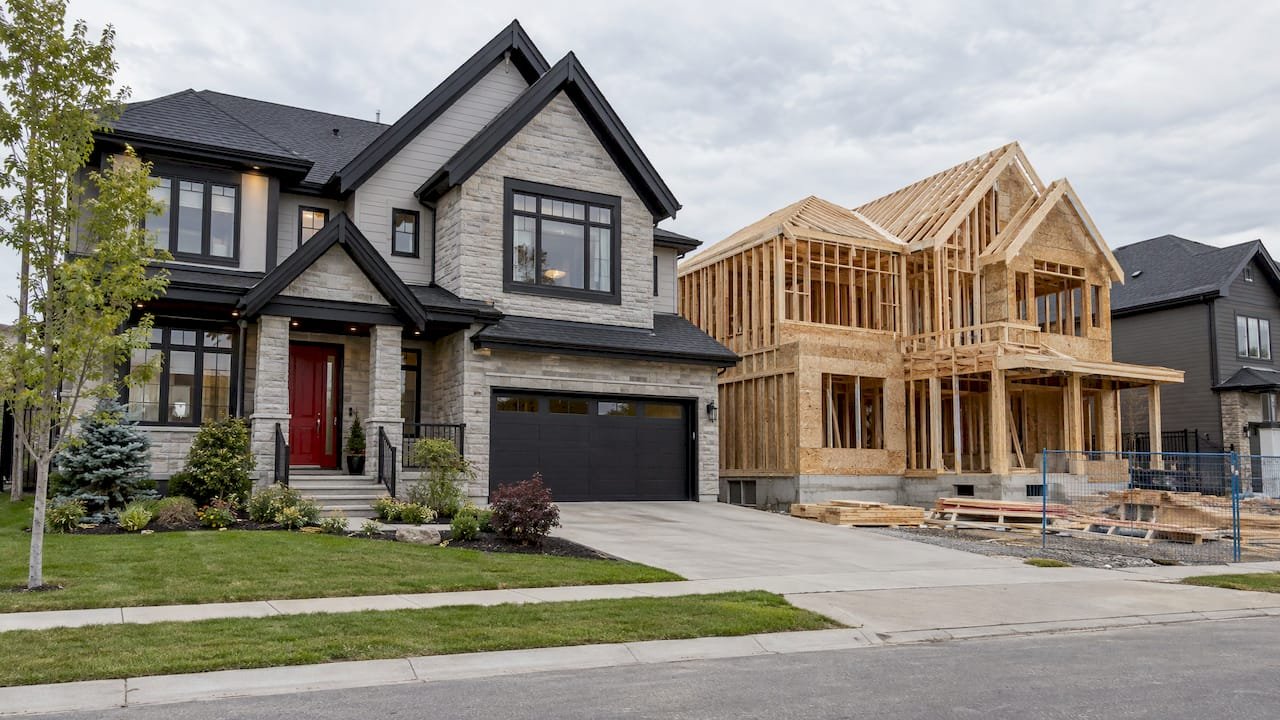
For most first-time buyers in Calgary, Airdrie and Cochrane, buying is the faster and more predictable route, and building makes sense when you already have land, need a specific layout or can carry a longer, more cash-heavy process. The deciding factor is rarely the sticker price. It is the financing: a purchase mortgage works with as little as 5% down, while a build brings progress draws, a larger down payment and a longer period in which your finances must stay stable. At DreamHouse Mortgage we structure both kinds of file, so you can price the two paths against each other before you commit. Call Guriqbal Chahal at 403-966-6072.
TL;DR
- Buying an existing or new-build home that is already finished typically closes in 30 to 60 days. Building typically takes 12 to 18 months from buying land to moving in, according to Zolo.
- Construction alone for a 2,000 sq ft home in Calgary is estimated at $360,000 to $550,000 for 2026, and that excludes land, according to NerdWallet Canada.
- Buying can start from 5% down. Building typically needs at least 25% down, so the cash you hold often decides the route.
- Hold a contingency of 10% to 15% of the build budget, and more at the early design stage.
- A mortgage broker can pre-approve you for either path and line up the lender before you sign a purchase contract or a builder agreement.
Table of Contents
- What “buying” and “building” actually mean in Calgary
- Cost: what you pay for the same house
- Timeline: weeks against more than a year
- Financing: where buying and building really differ
- When buying wins, and when building wins
- How much contingency do you need?
- What the income looks like
- Why a broker helps before you choose
- Start with your numbers
- Our perspective
- FAQ
- Sources
What “buying” and “building” actually mean in Calgary
The two words cover more options than they suggest, and the choice you are really making is between four things.
- Resale home: an existing house, townhouse or condo in a community like Bridgeland, Marda Loop, Airdrie’s Kings Heights or Cochrane’s Heartland. You see exactly what you are buying and can usually take possession within weeks.
- New build from a production builder: a home on a lot in a new community such as Livingston, Cranston or Chestermere’s Lakeside Greens. You choose from the builder’s plans, finishes and lots. The builder handles construction and you close at completion.
- Custom build on your own lot: you buy or already own land, hire a designer and builder, and manage the budget. This is the most flexible and the most demanding path.
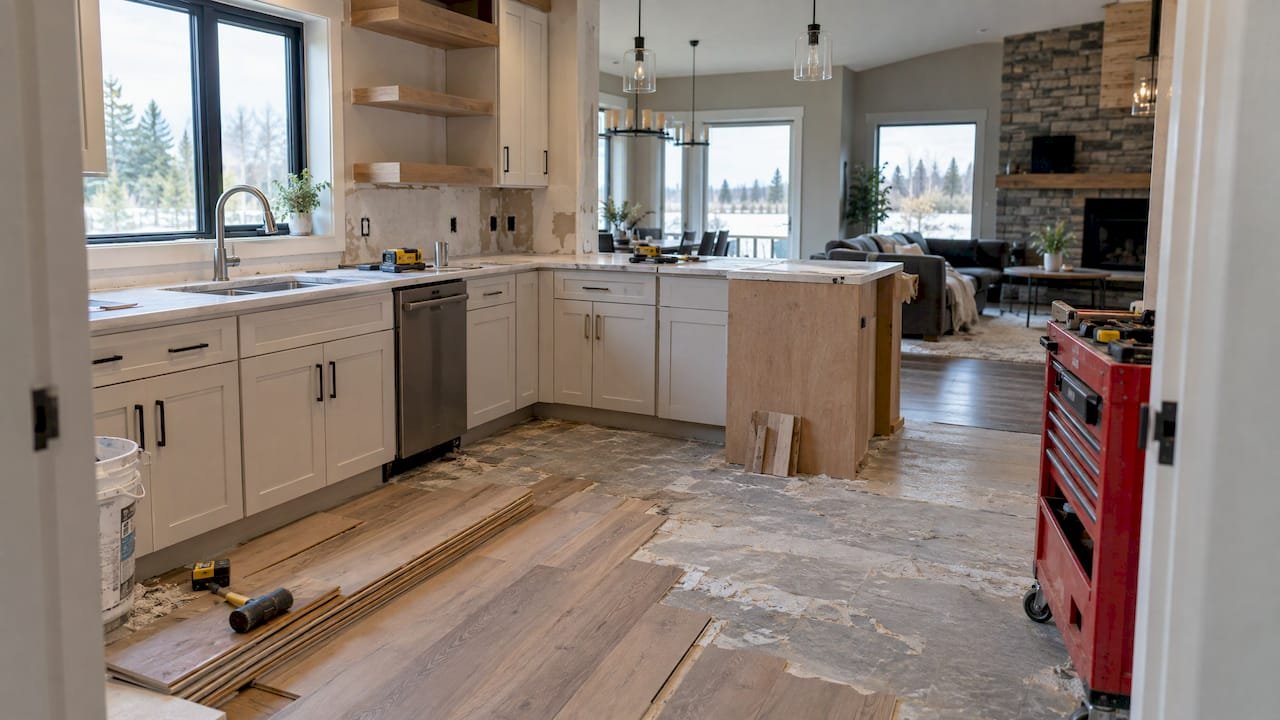
- Resale plus renovation: a dated home bought below market and updated. It sits between buying and building and should be priced against both.
The rest of this article compares resale against building, and shows where the financing differs, because that is where first-time buyers are most often caught off guard.
Cost: what you pay for the same house
The building cost, before land
NerdWallet Canada, drawing on Altus Group’s 2026 cost guide, puts the cost of building a 2,000 sq ft home at $360,000 to $550,000 in Calgary and $350,000 to $550,000 in Edmonton, excluding land. For comparison, the same source gives $400,000 to $630,000 for Vancouver and $300,000 to $550,000 for Toronto. Land is the biggest extra cost, and demolishing an existing house on an infill lot adds $10,000 to $45,000.
Per-square-foot figures need care. Nedes Estimating reports Canadian construction rates of $140 to $320 per sq ft for builder-grade homes and $345 to $1,250+ for custom builds. It adds that these rates leave out land, development charges, permits, design fees and tax, which commonly add another 20% to 40%. Treat any quote that gives only a per-square-foot number as a starting point, not a budget.
The costs people forget on a build
Beyond the contract price, a build budget needs lines that a resale purchase does not have:
- Land, plus servicing and site work on an acreage near Cochrane or Rocky View County (clearing, driveway, grading, well and septic where there is no municipal service).
- Design fees, permits, surveys and engineering, which Blaze Estimating and other cost guides treat as separate from the construction rate.
- Landscaping, fencing, driveway, window coverings and appliances, which are usually already in place in a resale home. One 2026 Canadian comparison estimates $30,000 to $50,000 for forgotten finishing items on a build. That example is from Ontario, so use it as a reminder of the category and not as a Calgary price.
- Interest during construction, and rent or a mortgage payment on your current home while you wait.
GST on a new home
A resale home is generally not charged GST. A new home is. In Alberta there is no provincial sales tax, so the federal GST is what applies. First-time buyers have a meaningful offset: the federal first-time home buyers’ GST/HST rebate can, combined with the new housing rebate, return 100% of the GST on a new home valued at $1 million or less. The rebate is gradually reduced between $1 million and $1.5 million, and there is none at $1.5 million or more. Eligibility rules apply, so confirm yours before you rely on it. Our guide to first-time home buyer benefits in Canada walks through the GST rebate alongside the FHSA and the Home Buyers’ Plan.
Resale has its own extra costs
A resale price is not the final price either. Budget for a home inspection, first-year repairs and the age of the roof, furnace, windows and hot water tank. A dated home priced below a new build can need substantial renovation to reach the same standard. One Ontario builder’s 2026 guide estimates $100,000 to $250,000 or more for kitchen, baths, windows, mechanicals and insulation, so price that scenario honestly before you decide a resale is the cheaper choice.
A simple way to compare
| Line | Resale home | Build |
|---|---|---|
| Purchase or construction price | Listed price | Contract price or quotes |
| Land | Included | Separate if you buy the lot |
| GST | Generally none | Applies, with first-time buyer rebate possible |
| Finishing (landscaping, fence, appliances) | Usually in place | Often extra |
| Renovation or repairs | Inspect and budget | Low early on |
| Interest and housing cost during the wait | None | Draw interest plus current housing |
| Contingency | Small repair fund | 10% to 15% of budget, higher early |
Put your own numbers in each row for two or three specific homes, one resale and one build, and the better route for your situation is usually clear.
Timeline: weeks against more than a year
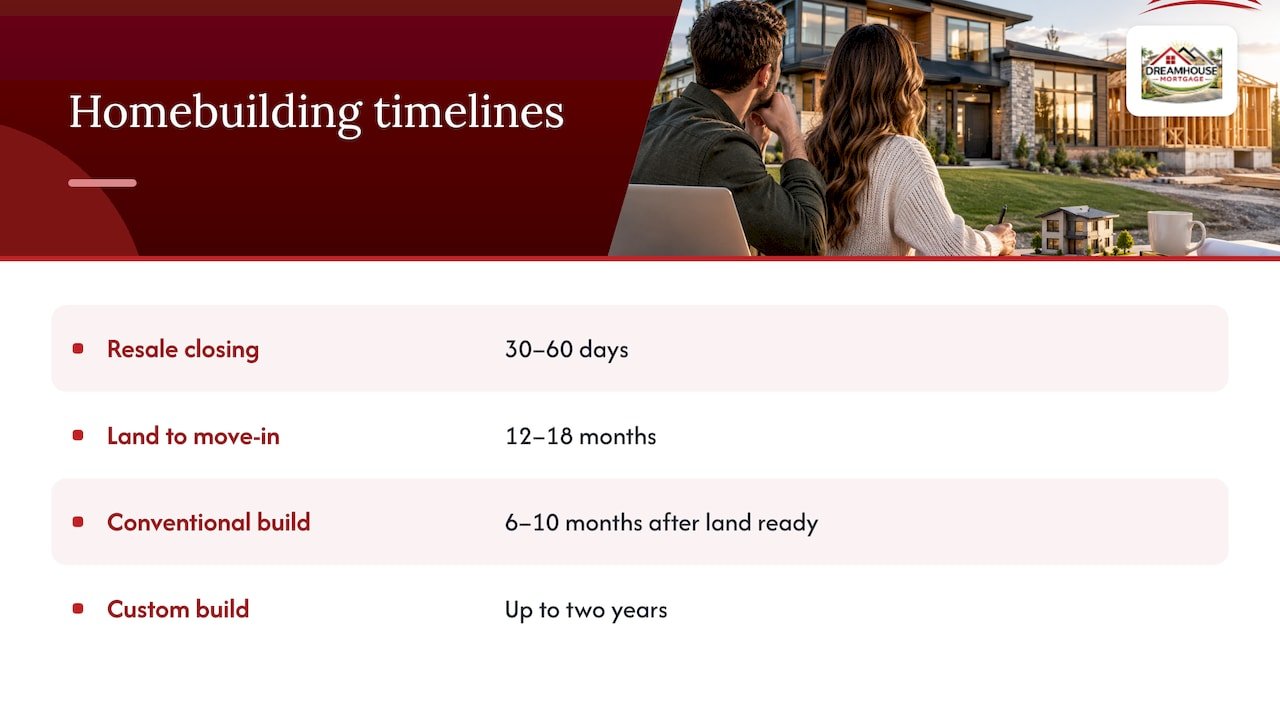
A resale closing typically takes 30 to 60 days, while a build takes 12 to 18 months from buying land to moving in, and longer for custom designs. NerdWallet Canada’s narrower estimate counts only the construction once land is ready: six to 10 months for a conventional home and up to two years for a custom one. Weather, material shortages, financing problems and contractor availability are the usual causes of delay.
Calgary’s winters matter. Foundation and framing schedules can slip when concrete work is held up by cold, so a build that starts in autumn may not progress at the pace a summer start does.
The timeline affects your mortgage more than most buyers expect. Lenders typically hold a rate for a limited period, and a long build can outlast it. If your financing is a completion mortgage, which funds once at possession, your qualification and the home’s appraised value are tested near the end of the build, not at the start. That is why a pre-approval taken before construction needs to be revisited as the build progresses.
Financing: where buying and building really differ
Buying a home
For a home that is already built, the mortgage is straightforward. The minimum down payment is 5% of the first $500,000 of the price and 10% of the portion between $500,000 and $1.5 million, and 20% at $1.5 million or above, as summarized by WealthNorth. Below 20% down, the mortgage is insured, which adds a premium but opens the door for buyers without a large deposit. Federally regulated lenders also test you at the higher of your contract rate plus two percentage points or a 5.25% floor, so the payment you qualify at is higher than the payment you make.
Our mortgage pre-approval fixes your purchase budget and a rate hold before you shop. Our guide to mortgage down payment types in Canada explains which sources of down payment lenders accept.
Building a home
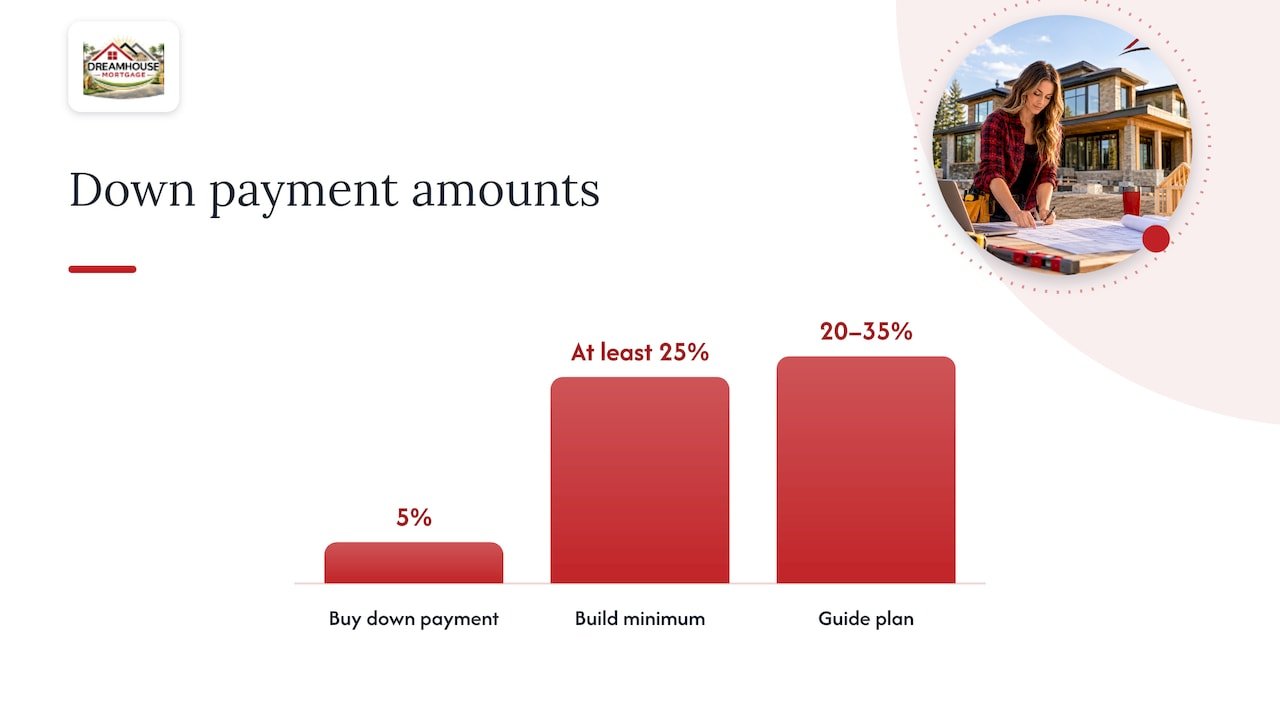
Building usually asks for more cash up front. Zolo notes that building typically needs at least 25% down against as little as 5% to buy. Our Alberta construction mortgage guide plans around 20% to 35% down and three to five draws, and the exact figure depends on the lender, the builder and your file.
There are two main structures, and which one applies depends on who builds:
- Progress-draw mortgage: the lender releases funds in stages after inspections, and you pay interest only on the amount drawn. It is common for self-builds and custom homes. See our guide to mortgage draws for Alberta home builders.
- Completion mortgage: funded in one amount at possession, which is typical when you buy from a production builder. See how a completion mortgage works for Calgary buyers.
Our comparison, draw versus completion mortgage, shows which one fits a new build.
CMHC also offers insured financing for buyers who build or buy-and-improve. CMHC Improvement provides insured financing up to 95% of the as-improved value for owner-occupied one- and two-unit properties, with the down payment based on the lower of market value or the purchase price plus construction cost. Whether a given lender and file qualify is something to confirm with your broker before you buy land.
Keep your file clean during a build
Because funding can depend on qualification at completion, avoid changes that alter your income or debts between pre-approval and possession:
- Do not take on a new car loan or large credit line.
- Talk to your broker before any job change, especially if you are moving to self-employment.
- Keep a cash buffer outside the deposits you owe the builder.
- Confirm how the builder’s deposit schedule interacts with your financing.
Pro Tip: Share the builder’s contract and deposit schedule with your broker before you sign, not after. The financing terms should shape the contract, not the other way around.
When buying wins, and when building wins
Nedes Estimating’s summary matches what we see in the Calgary region: buying tends to win in urban markets with strong resale inventory when timing matters and you have no strong lot preference, while building tends to win when you own or can access land, or when accessibility or energy-performance needs are hard to meet in resale homes.
Buying fits you if:
- You have a 5% to 10% down payment and want the lowest cash requirement.
- You need to move within two months, for example because a lease is ending.
- You want an established community with schools, transit and mature trees, such as Altadore, Mahogany or Airdrie’s Williamstown.
- You want to know the exact price and condition before you commit.
Building fits you if:
- You have at least 25% down, plus a contingency fund on top.
- You already own or can buy a suitable lot, perhaps in Cochrane, Rocky View County or Chestermere.
- You need a specific layout, such as a main-floor suite or an accessible design.
- You can afford a 12 to 18 month timeline and carry housing costs in the meantime.
If you want a new home without managing the construction, buying from a production builder gives you new-home finishes with a defined closing date. We compare that route in new build versus resale in Calgary.
How much contingency do you need?
Zolo recommends a contingency of 10% to 15% of the total build budget for overruns and unexpected expenses. Construction estimators apply a sliding scale: up to 30% at the earliest design stage, down to no more than 10% once drawings are final.
A worked example: on a $450,000 construction budget, 10% is $45,000 and 15% is $67,500. Add that to the land, design and finishing costs, and then check it against the down payment and cash you actually hold. A buyer with 25% down and no contingency has not really met the requirement for building.
What the income looks like
Buyers often ask what income a larger purchase requires. WealthNorth’s calculation shows a $1,000,000 home needs a gross household income of about $222,300 with the minimum down payment, or about $197,500 with 20% down, assuming a 25-year amortization, 1% property tax, $150 per month for heat, no other debts and standard debt-service limits. Those results move with your down payment, the rate, the amortization and your other debts. For your own numbers, a pre-approval is the reliable test, because it uses your income, debts and credit instead of assumptions.
If you are new to Canada, lenders also look at how your income and credit history are documented. Buyers with documents issued abroad can read about apostille for Canadian real estate when preparing paperwork for cross-border property matters. Our foreign credit mortgage guide explains how newcomers qualify.
Why a broker helps before you choose
The lender that suits a resale purchase is often not the one that suits a draw-based build. DreamHouse Mortgage works with banks, credit unions, monoline lenders, alternative lenders and private lenders, so the same conversation can compare a purchase mortgage and a construction mortgage. Our team assists with qualification, lender selection, document collection, approvals, rate comparisons and funding coordination. For self-employed buyers and newcomers, which are two groups we serve in Calgary, Airdrie, Cochrane and Chestermere, that range of lenders matters most.
Here is the order we suggest:
- Get pre-approved first. Know your purchase budget and your build budget before you look at plans or listings.
- Price both options on paper. Use the table above for one resale and one build in the communities you like.
- Choose the mortgage structure. Purchase, draw or completion.
- Share the contract before you sign. Deposits, closing dates and rate holds should line up.
- Stay stable until funding. Keep your income, debts and credit unchanged.
If this is your first purchase, start with our first-time home buyer mortgage guide for Calgary.
Start with your numbers
Whether you lean toward a finished home in Calgary or a lot in Cochrane, the first step is the same: a mortgage plan that shows what you can afford and how much cash each path needs. DreamHouse Mortgage offers first-time buyer mortgages and pre-approvals in Calgary and across Alberta. Start with a mortgage pre-approval and bring the plans or listings you are weighing.

Call Guriqbal Chahal, MBA, PMP, Mortgage Broker, at 403-966-6072, or find us on our Google Business Profile.
Our perspective
Most buyers who ask us about building have not yet priced the financing, and that is where the decision is made. A resale purchase and a build are two different mortgage files. One is funded at closing against a home that exists. The other depends on draws, inspections, a builder’s deposit schedule and your qualification at the end.
Our advice is to settle the financing before the design. When we pre-approve a buyer, we look at the down payment they hold, the lender options for their income type, and the structure that fits the builder they plan to use. Because we work with banks, credit unions, monoline, alternative and private lenders, we can set a resale mortgage beside a draw or completion mortgage and show the real difference in cash and in time.
For many first-time buyers in Calgary, Airdrie and Cochrane, buying is the clearest first step. For buyers with land, a larger down payment and patience, building can be an excellent fit. In both cases, the best outcomes come from starting the conversation early and keeping the file steady until funding.
Guriqbal Chahal, MBA, PMP
FAQ
Is it cheaper to build or buy a house in Calgary?
It depends on land, size and finishes. Construction of a 2,000 sq ft home is estimated at $360,000 to $550,000 in Calgary before land, and the total grows with land, design fees, permits, GST and finishing. A resale home is a known price, but add inspection and repairs. Compare one specific resale with one specific build to see the true gap.
How much down payment do I need to build a house?
Building typically requires at least 25% down, against as little as 5% to buy a finished home. The amount varies by lender, builder and project. A broker can confirm the figure for your plans before you commit to land or a contract.
How long does it take to build a house compared with buying one?
A resale closing typically takes 30 to 60 days. A build typically takes 12 to 18 months from buying land to moving in, and a custom design can take longer. Weather and material or contractor delays can extend it.
Can first-time buyers get a rebate on a new home?
Eligible first-time buyers may qualify for the federal GST rebate on a new or substantially renovated home. The rebate can cover 100% of the GST on homes valued at $1 million or less, and it phases out between $1 million and $1.5 million. Confirm your eligibility with the Canada Revenue Agency and your broker.
Sources
- How Much Does It Cost to Build a House in Canada? (NerdWallet Canada)
- How Much Does it Cost to Build a House (Zolo)
- How Much Does It Cost to Build a House in Canada (2026) (Nedes Estimating)
- Cost to Build a House in Canada Per Sq Ft by City (2026) (Blaze Estimating)
- Build vs Buy Resale in Canada: 2026 Cost Comparison (PlansPlace.ca)
- Is It Cheaper to Build or Buy a House in Ontario? (BuildersOntario)
- GST/HST New Housing Rebate (Canada Revenue Agency)
- CMHC Improvement Mortgage Loan Insurance (CMHC)
- How Much Income Do I Need to Buy a House in Canada? (WealthNorth)
- Real Estate Apostille Canada: A Guide for Property Buyers