
- Self-employed borrowers in Canada qualify through three lender tiers: A-lenders, B-lenders, and private lenders, each with distinct documentation and credit requirements. Properly matching your financial profile to the right tier enhances approval chances, lowers costs, and prevents credit damage. Utilizing strategic documentation and expert advice allows for better refinancing options and tailored mortgage solutions across Alberta.
Self employed mortgage lender types in Canada fall into three distinct tiers: A-lenders (major banks and monolines), B-lenders (alternative lenders), and private lenders, each with separate qualification paths, documentation standards, and interest rate ranges. If you run your own business in Calgary, Edmonton, Cochrane, Airdrie, or anywhere across Alberta, the lender category you target determines how your income is verified, what rate you pay, and how quickly you get approved. Three lender tiers serve self-employed borrowers with A-lender rates from 3.5% to 5.5%, B-lender rates from 5.0% to 8.0%, and private lender rates from 6.0% to 15% or higher. Knowing which tier fits your financial profile is the single most important decision you will make before applying.
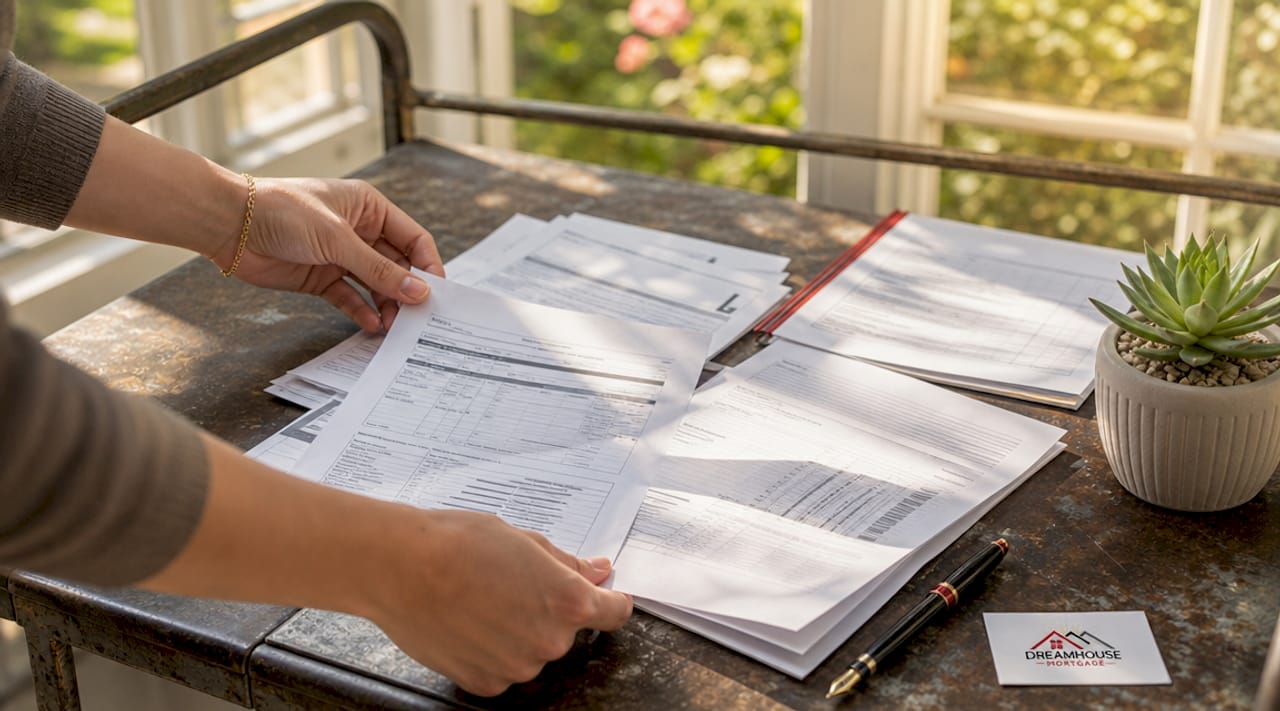
1. Self employed mortgage lender types in Canada: the three-tier framework
Canadian mortgage for self-employed borrowers is organized around three lender categories, each regulated differently and serving a distinct borrower profile. A-lenders include federally regulated banks such as RBC, TD, and BMO, along with monoline lenders like First National and MCAP. B-lenders, also called alternative or Alt-A lenders, include Equitable Bank, Home Trust, and ICICI Bank Canada. Private lenders and Mortgage Investment Corporations (MICs) sit at the third tier, offering equity-based financing with minimal income verification.
The tier you qualify for depends on three factors: your credit score, the quality of your income documentation, and how long you have been self-employed. Most self-employed borrowers in Alberta start by applying to A-lenders and work down the tiers only if needed. Understanding all three options before you apply gives you a clear picture of your choices and prevents unnecessary credit inquiries.
2. A-lenders: qualifying with full documentation
A-lenders are federally regulated financial institutions and monoline lenders that offer the lowest mortgage rates available to self-employed borrowers. RBC, TD, Scotiabank, BMO, First National, and MCAP all fall into this category. To qualify, you must demonstrate at least two years of continuous self-employment history supported by complete tax documentation.
The standard documents A-lenders require include:
- T1 General tax returns for the most recent two years
- Notices of Assessment (NOA) from the Canada Revenue Agency for both years
- Business financial statements prepared by a CPA
- Proof of business registration or articles of incorporation
- Six months of business and personal bank statements
A-lenders use CRA Line 15000 net taxable income to calculate your qualifying amount. This creates a significant problem for self-employed borrowers who use aggressive expense write-offs to reduce taxable income. Aggressive expense write-offs can directly reduce the income A-lenders use to qualify you, which lowers your maximum mortgage amount even if your actual cash flow is strong. Working with a broker who understands how to present retained earnings and dividends alongside your T1 income can meaningfully increase your borrowing capacity.
Credit score expectations at A-lenders sit at 680 or above, and you must pass the federal mortgage stress test at the Bank of Canada qualifying rate. Down payments start at 5% for insured mortgages, though most self-employed borrowers with complex income structures put down 20% or more to avoid CMHC insurance requirements.
Pro Tip: If your NOA shows low taxable income due to write-offs, ask your accountant to prepare a two-year average income calculation and a letter confirming business stability. Some A-lenders will consider this alongside your T1 returns.
Self-employed professionals with recognized credentials, such as chartered accountants or physicians, often receive faster approvals and more favorable treatment at A-lenders. Recognized professionals face lower perceived risk, which translates to less documentation scrutiny and faster processing times compared to contractors or retailers.
3. B-lenders: alternative documentation for self-employed Canadians
B-lenders serve self-employed borrowers who cannot meet A-lender documentation requirements but have solid cash flow and reasonable credit. Equitable Bank, Home Trust, and ICICI Bank Canada offer Alt-A products specifically designed for non-traditional income verification, making them a practical middle ground between major banks and private lenders.
The defining feature of B-lender programs is the use of alternative income documentation. Instead of relying solely on T1 returns, B-lenders accept:
- Bank statement programs: 12 to 24 months of business deposits analyzed to calculate average monthly income
- Stated income programs: Borrower declares income supported by industry benchmarks and business registration
- Gross revenue programs: Income calculated from business revenue before expenses, using a lender-specific expense ratio
Bank statement programs analyze 12 to 24 months of business deposits to calculate qualifying income. This method directly benefits self-employed borrowers in Calgary or Red Deer who show strong cash deposits but report low taxable income after write-offs.
B-lender credit score minimums typically range from 550 to 600, which is significantly lower than A-lender thresholds. The trade-off is a rate premium. B-lender rates run from 5.0% to 8.0%, which is 1.0% to 2.5% higher than comparable A-lender rates. Most B-lender programs for self-employed borrowers require a minimum 20% down payment, removing the CMHC insurance requirement entirely.
Pro Tip: Use a B-lender strategically as a two-year stepping stone. Build your documentation record, improve your credit score, and refinance to an A-lender at renewal for a lower rate.
The ideal B-lender borrower is a self-employed tradesperson, consultant, or small business owner in Alberta who has been operating for one to two years, has strong bank deposits, and carries a credit score between 580 and 660. For a detailed breakdown of when and why to use this lender category, the B-lender mortgage guide from DreamHouse Mortgage covers Alberta-specific scenarios in depth.
4. Credit unions: the overlooked option for self-employed borrowers
Credit unions occupy a unique position in the Canadian mortgage market that most self-employed borrowers in Alberta overlook entirely. They are provincially regulated, which means they operate outside some federal lending rules and can apply manual underwriting to complex income situations.
Credit unions offer flexible underwriting for self-employed borrowers through manual evaluation, allowing a nuanced review of complex finances that automated bank systems cannot replicate. A credit union underwriter in Calgary or Cochrane can review your full financial picture, including business assets, retained earnings, and industry context, rather than running your application through a scoring algorithm.
Credit unions in Alberta, such as Servus Credit Union and Connect First Credit Union, often accommodate self-employed borrowers with two or more years of history who fall just short of A-lender thresholds. Rates at credit unions are generally competitive with A-lenders, and their willingness to conduct manual reviews makes them worth contacting before moving to a B-lender. The key limitation is that credit unions typically serve members within a specific geographic area, so your options depend on where your business operates.
5. Private lenders and MICs: equity-based financing explained
Private lenders and Mortgage Investment Corporations provide financing based primarily on property equity rather than income verification. This makes them the most accessible option for self-employed borrowers with poor documentation, recent credit issues, or urgent financing needs.
Private lending rates range from 7% to over 15%, with terms typically set at one year. Private loans serve high-net-worth self-employed professionals lacking complete documentation, functioning as short-term bridges before refinancing to better lenders. This is a critical point. Private lending is not a permanent solution. It is a tool for accessing property while you build the documentation or credit history needed to qualify with an A-lender or B-lender at renewal.
Key features of private lending for self-employed borrowers in Alberta:
- Loan-to-value (LTV) limits: Most private lenders cap financing at 65% to 80% of the property’s appraised value
- Down payment requirements: Typically 20% to 35% depending on the lender and property type
- Income verification: Minimal. Lenders focus on the property appraisal and equity position
- Approval speed: Private lenders can approve and fund in days rather than weeks
- Lender fees: Expect lender fees of 1% to 3% of the mortgage amount in addition to the higher rate
Private lending is a short-term financial tool, not a long-term mortgage strategy. The goal is always to qualify for A-lender or B-lender financing at renewal by improving your documentation, credit score, or both.
The scenarios where private lending makes sense for self-employed borrowers include: purchasing a property while waiting for two full years of T1 documentation to accumulate, recovering from a period of poor credit while maintaining strong property equity, or closing a time-sensitive purchase that a traditional lender cannot process quickly enough.
6. Comparison of lender types for self-employed borrowers
Selecting the right lender tier requires matching your current financial profile to the lender’s actual criteria. The table below summarizes the key factors across all three tiers.
| Factor | A-lenders | B-lenders | Private lenders |
|---|---|---|---|
| Interest rate range | 3.5% to 5.5% | 5.0% to 8.0% | 7.0% to 15%+ |
| Minimum credit score | 680+ | 550 to 600 | No minimum (equity-based) |
| Income documentation | T1 General, NOA, financials (2 years) | Bank statements (12 to 24 months) or stated income | Property appraisal only |
| Minimum down payment | 5% (insured) or 20% (conventional) | 20% | 20% to 35% |
| Self-employment history | 2+ years required | 1 to 2 years accepted | Not required |
| Approval timeline | 5 to 10 business days | 3 to 7 business days | 1 to 5 business days |
| Best use case | Strong documentation, 680+ credit | Good cash flow, lower taxable income | Urgent needs, credit rebuilding |
Matching applicants with optimal income verification methods minimizes denials and maximizes borrowing power. This means the lowest rate is not always the right target. A self-employed contractor in Okotoks with strong bank deposits but two years of aggressive write-offs will get a better outcome from a B-lender bank statement program than from a rejected A-lender application that damages their credit score.
Pro Tip: Before applying anywhere, pull your own credit report through Equifax Canada or TransUnion Canada. Knowing your score in advance lets you target the right lender tier without wasting credit inquiries on applications you are unlikely to pass.
For current rate comparisons across lender tiers in Alberta, the self-employed mortgage rates page at DreamHouse Mortgage is updated regularly with competitive options from multiple lender categories.
7. Documentation strategies that improve approval outcomes
The documentation you present to a lender determines which tier you qualify for and at what rate. Self-employed borrowers in Calgary, Edmonton, and Airdrie who prepare their documents strategically before applying consistently achieve better outcomes than those who apply reactively.
Presenting business retained earnings and dividends properly can significantly increase borrowing capacity with traditional lenders. If your corporation retains earnings rather than paying them out as salary, an A-lender using only your T1 Line 15000 income will undercount your actual financial strength. A broker who understands how to present corporate financials alongside personal tax returns can close this gap.
The mortgage documentation checklist for self-employed borrowers applying to different lender tiers includes:
- For A-lenders: Two years of T1 General returns, two NOAs, current year financial statements, business registration, and six months of bank statements
- For B-lenders: 12 to 24 months of business bank statements, business registration, credit report, and property details
- For private lenders: Property appraisal, proof of down payment, and basic identification
Organizing these documents before you contact any lender shortens the approval timeline and demonstrates financial credibility. The mortgage checklist for Alberta borrowers from DreamHouse Mortgage provides a complete document list organized by lender type.
Key takeaways
Self-employed borrowers in Canada qualify for mortgages through three distinct lender tiers, and matching your documentation type to the right tier is more important than chasing the lowest rate.
| Point | Details |
|---|---|
| Three lender tiers exist | A-lenders, B-lenders, and private lenders each serve different documentation and credit profiles. |
| A-lenders need two years of T1 income | Major banks use CRA Line 15000 income; write-offs reduce qualifying amounts significantly. |
| B-lenders accept bank statements | 12 to 24 months of deposits can replace T1 returns for borrowers with strong cash flow. |
| Private lending is a bridge, not a destination | Short-term private loans allow property access while borrowers build documentation for better lenders. |
| Lender selection beats rate shopping | Choosing the right lender tier for your profile prevents denials and protects your credit score. |
What I have learned working with self-employed borrowers in Alberta
After years of working with self-employed clients across Calgary, Cochrane, Chestermere, and Red Deer, the pattern I see most often is this: borrowers spend months trying to qualify with a major bank, collect a rejection, and only then contact a broker. That sequence costs them time, credit inquiries, and sometimes the property itself.
The conventional advice is to always try A-lenders first because the rates are lower. I disagree with applying that rule blindly. If your last two years of T1 returns show $60,000 in net income because you wrote off $80,000 in legitimate business expenses, an A-lender will qualify you on $60,000 regardless of your actual cash position. A B-lender using a bank statement program might qualify you on $120,000 in average monthly deposits. The B-lender rate is higher, but the approval is real.
What I tell every self-employed client before we start is this: show me your last two NOAs, your last 12 months of business bank statements, and your credit report. Those three documents tell me exactly which lender tier fits your current profile and what rate range is realistic. Guessing without that information leads to wasted applications.
The other thing most articles do not say clearly enough is that credit unions in Alberta are genuinely underutilized by self-employed borrowers. Servus Credit Union and Connect First Credit Union both conduct manual reviews that can accommodate income structures that automated bank systems reject outright. If you are in that 660 to 680 credit score range with a complex income profile, a credit union deserves a serious look before you accept a B-lender rate.
The goal for every self-employed client I work with is a two-step plan: get into the right lender tier today, and position for a better tier at renewal. That means choosing a lender whose term aligns with when your documentation will be strong enough to refinance upward.
— Guriqbal Chahal, MBA, PMP
Get matched with the right lender for your self-employed mortgage
DreamHouse Mortgage works with A-lenders, B-lenders, credit unions, and private lenders across Alberta to match self-employed borrowers with the financing option that fits their actual income profile. Whether you are purchasing in Calgary, Airdrie, Okotoks, or Cochrane, the team at DreamHouse Mortgage reviews your documentation before any application is submitted, so you target the right lender tier from the start.

The self-employed mortgage guide covers qualification strategies, lender comparisons, and documentation requirements specific to Alberta borrowers. For questions about mortgage broker fees and how broker services work at no cost to most borrowers, that page explains the full picture. Call Guriqbal Chahal, MBA, PMP, Mortgage Broker at DreamHouse Mortgage at 403-966-6072 for a no-obligation consultation and personalized lender recommendation.
FAQ
What are the main mortgage lender types for self-employed Canadians?
Self-employed borrowers in Canada access mortgages through three lender tiers: A-lenders (major banks and monolines like RBC and First National), B-lenders (alternative lenders like Equitable Bank and Home Trust), and private lenders or MICs. Each tier has different documentation requirements, credit score minimums, and interest rate ranges.
How do B-lenders verify income for self-employed borrowers?
B-lenders use bank statement programs that analyze 12 to 24 months of business deposits to calculate qualifying income, which benefits borrowers with strong cash flow but low reported taxable income on their T1 returns. Some B-lenders also accept stated income supported by business registration and industry benchmarks.
What credit score do I need for a self-employed mortgage in Alberta?
A-lenders require a minimum credit score of approximately 680, while B-lenders accept scores as low as 550 to 600. Private lenders do not set a credit score minimum because they base approval on property equity and loan-to-value ratios rather than creditworthiness.
Can I get a self-employed mortgage with only one year of business history?
Most A-lenders require two full years of self-employment history documented by T1 returns and NOAs. Some B-lenders will consider applicants with one to two years of history when supported by strong bank statements and a solid credit profile. Private lenders impose no minimum business history requirement.
Is it worth using a mortgage broker as a self-employed borrower in Calgary?
A mortgage broker with experience in self-employed files can match your income documentation to the correct lender tier before any application is submitted, preventing credit score damage from rejected applications. Brokers also have access to lenders and programs not available directly to borrowers, which is particularly valuable for self-employed clients with complex income structures.
Recommended
- Self-Employed Mortgage Calgary: The Ultimate 2026 Guide to Getting APPROVED
- Best Self Employed Mortgage Rates Alberta 2026
- Rental Property Mortgage Canada: Avoid Costly Investor Mistakes & Secure Smarter Financing
- Canadian Mortgage Rates 2026: What You Need to Know Before You Choose a Lender
- Find Your Home – Search MLS Listings at Dreamhouse Realty