
If you’re a committed first-time buyer, prioritize the FHSA. If you want flexibility with no strings attached, prioritize the TFSA. Fund both if your budget allows: in 2026, the FHSA annual contribution limit is $8,000 and the TFSA annual contribution limit is $7,000. Either way, the account you choose shapes your mortgage pre-approval, so talk to a broker before you lock in a strategy.
TL;DR:
- The FHSA provides a higher annual contribution limit of $8,000 in 2026 with a $40,000 lifetime cap, making it more advantageous for those planning to buy within 15 years.
- The TFSA allows a $7,000 annual contribution in 2026 and up to $109,000 in cumulative room since 2009, offering maximum flexibility and no expiration for withdrawals.
- Combining both accounts yields up to $15,000 yearly in tax-advantaged savings, which can significantly accelerate savings toward a home in a city like Calgary.
- Prioritizing the FHSA makes sense for buyers with taxable income seeking a tax deduction, but the TFSA’s flexibility benefits uncertain plans or emergency needs.
- Proper documentation of savings and understanding the interaction with mortgage pre-approval are critical for converting these accounts into a usable down payment.
Table of Contents
- TFSA vs FHSA Comparison: 2026 Limits and Rules Side by Side
- How Do the TFSA, FHSA, RRSP, and HBP Actually Work?
- Should You Fund the FHSA First, the TFSA First, or Both?
- What Does This Mean for Mortgage Pre-Approval in Calgary?
- The Bottom Line on TFSA vs FHSA for First-Time Buyers
- Why the “Just Pick One” Advice Misses the Point
- DreamHouse Mortgage: Turning Your FHSA and TFSA Savings Into a Calgary Home
- Sources
- FAQ
TFSA vs FHSA Comparison: 2026 Limits and Rules Side by Side
The FHSA and TFSA solve different problems even though both let your money grow tax-free. The FHSA is purpose-built for a home purchase and gives you a tax deduction on top of tax-free withdrawals. The TFSA has no restrictions on how you spend it, but it never gives you that upfront deduction.
| Feature | FHSA | TFSA |
|---|---|---|
| 2026 annual limit | 8,000 Canadian dollars | 7,000 Canadian dollars |
| Lifetime/cumulative limit | 40,000 Canadian dollars | 109,000 Canadian dollars (for those 18+ since 2009) |
| Tax treatment on contribution | Deductible (like an RRSP) | Not deductible |
| Tax on qualifying withdrawal | Tax-free for a first home | Always tax-free |
| Recontribution/carryforward | Unused room carries forward | Withdrawn amounts added back next calendar year |
| Purpose restriction | First-time home purchase only | None |
| Expiry/closing rules | Must close within 15 years or use funds | No expiry |
The FHSA’s 2026 annual contribution room is $8,000, with a $40,000 lifetime cap, while the TFSA carries a $7,000 annual limit and up to $109,000 in cumulative room for anyone who’s been eligible since 2009.
Three things stand out once you see the numbers side by side:
- A committed buyer earning a mid-to-high income gets more value from the FHSA because the deduction reduces taxable income now, not just later.
- Someone unsure about buying, or who needs an emergency cushion, is better served by the TFSA’s unrestricted withdrawals.
- Anyone with enough cash flow to fund both accounts captures the deduction and the flexibility in the same tax year.
Combined, that’s $15,000 a year of tax-advantaged saving between the two accounts, which for a Calgary household saving toward a down payment adds up fast.
How Do the TFSA, FHSA, RRSP, and HBP Actually Work?
Each account plays a distinct role in a Calgary buyer’s savings plan, and understanding the mechanics prevents costly mistakes at tax time.
TFSA. Any Canadian resident 18 or older can open one. Contribution room accumulates annually whether or not you contribute, and withdrawals are tax-free with no restriction on use. Withdraw $10,000 this year and that room returns to you on January 1 of the following year. One catch for newcomers: TFSA room only starts accumulating the year you turn 18 and establish Canadian tax residency, so someone who arrived in Calgary in 2023 doesn’t get the full cumulative room back to 2009.
FHSA. You qualify as a first-time buyer if you haven’t owned a home you lived in during the current year or the four preceding calendar years. Contributions are deductible on Schedule 15 of your tax return, and qualifying withdrawals toward your first home come out completely tax-free. You get 15 years from account opening to use the funds. Pull money out for a non-qualifying reason and it gets taxed as ordinary income. If you never buy, you can transfer the balance to an RRSP or RRIF tax-free without using up your RRSP contribution room, so the money is never truly stuck.
RRSP. Most Calgary buyers already know the RRSP as a retirement vehicle, but it still matters for home buying through the Home Buyers’ Plan.
Home Buyers’ Plan (HBP). The HBP lets you withdraw from your RRSP for a down payment, but you must repay it over 15 years or face it being added back to your taxable income. That’s the key difference from the FHSA: HBP funds are a loan to yourself, while FHSA withdrawals never need to be repaid.
Should You Fund the FHSA First, the TFSA First, or Both?
Work through three questions before you decide where your next dollar goes.
- Are you buying within 15 years? If yes, the FHSA’s clock and tax deduction work in your favor. If you’re not sure, the TFSA’s lack of restrictions protects you from a non-qualifying withdrawal tax hit.
- Do you have taxable income to offset? A Calgary professional earning $75,000 who contributes $8,000 to an FHSA gets a meaningful tax refund at filing time, on top of the tax-free growth. Someone with little taxable income gets less benefit from the deduction and may prefer the TFSA.
- Do you need access to the money for something other than a home? If yes, keep it in a TFSA.
For most committed buyers with steady income, the practical order looks like this: max the FHSA first to capture the deduction, then direct remaining savings into a TFSA for flexibility or an emergency fund. If your homebuying timeline is uncertain, flip the order and lean on the TFSA until your plans firm up.
Pro Tip: Use your FHSA tax refund as an extra down payment top-up or drop it straight into a TFSA. That refund is essentially free money you can put back to work immediately, and it doesn’t touch either account’s contribution room.
What Does This Mean for Mortgage Pre-Approval in Calgary?
Your lender wants to see where your down payment is coming from, and documented FHSA or TFSA balances make that conversation far easier. A mortgage broker can help structure proof of funds so your closing costs and down payment hold up under the mortgage stress test.
A practical checklist before you meet with a broker:
- Get pre-approved early to lock in a purchase range while you keep saving.
- Print or export statements showing FHSA and TFSA balances for the past several months.
- Set aside any FHSA tax refund specifically for the down payment.
- Confirm timing: funds need to be “seasoned” in your account, so avoid last-minute large deposits before closing.
A locked-in pre-approval range gives you room to keep saving with confidence, instead of guessing what you can actually afford in today’s Calgary market.
Guriqbal Chahal, MBA, PMP, and the team at DreamHouse Mortgage help first-time buyers in Calgary turn FHSA and TFSA balances into a clear, lender-ready down payment picture.
The Bottom Line on TFSA vs FHSA for First-Time Buyers
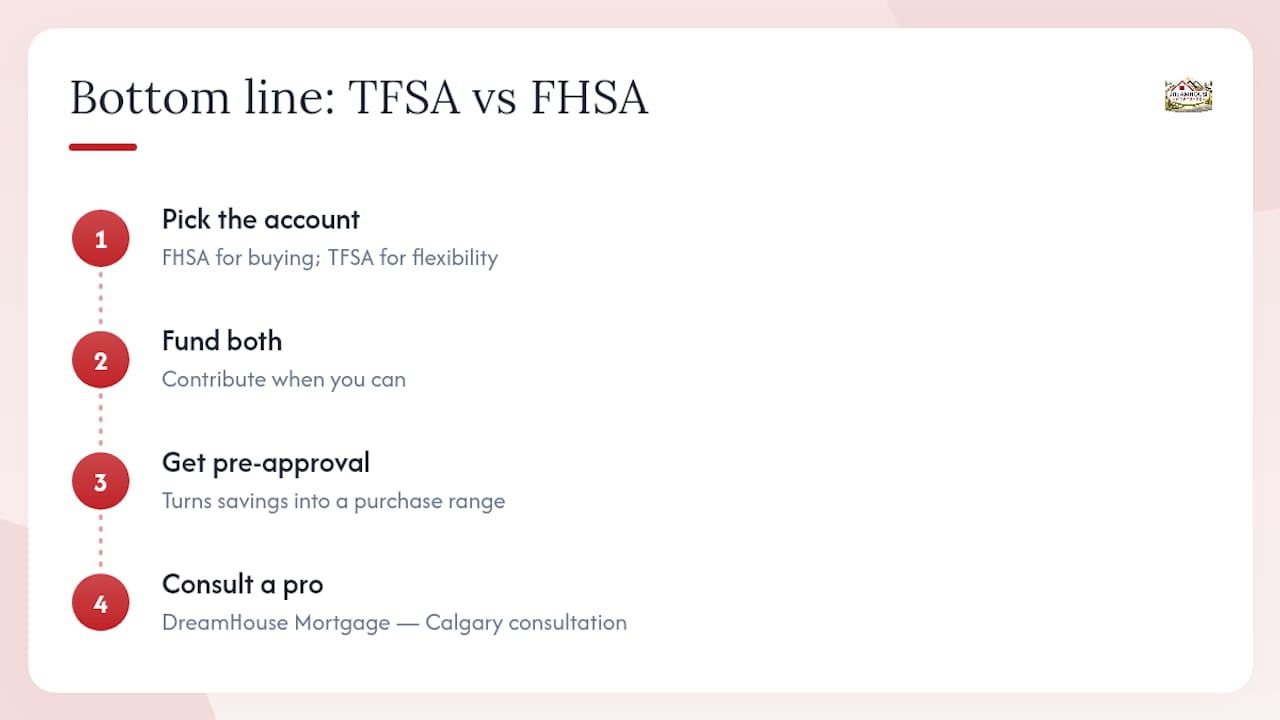
If buying is your goal, the FHSA usually wins. If flexibility matters more, the TFSA does. Fund both when you can, then get a mortgage pre-approval so your savings translate into a real purchase range. Reach out to DreamHouse Mortgage for a Calgary-focused consultation before you finalize your plan.
Why the “Just Pick One” Advice Misses the Point
Most comparison articles frame this as a binary choice, and that framing does Calgary buyers a disservice. The FHSA and TFSA aren’t competitors; they’re tools built for different jobs, and treating them as an either-or decision leaves money on the table for anyone who can afford to fund both.
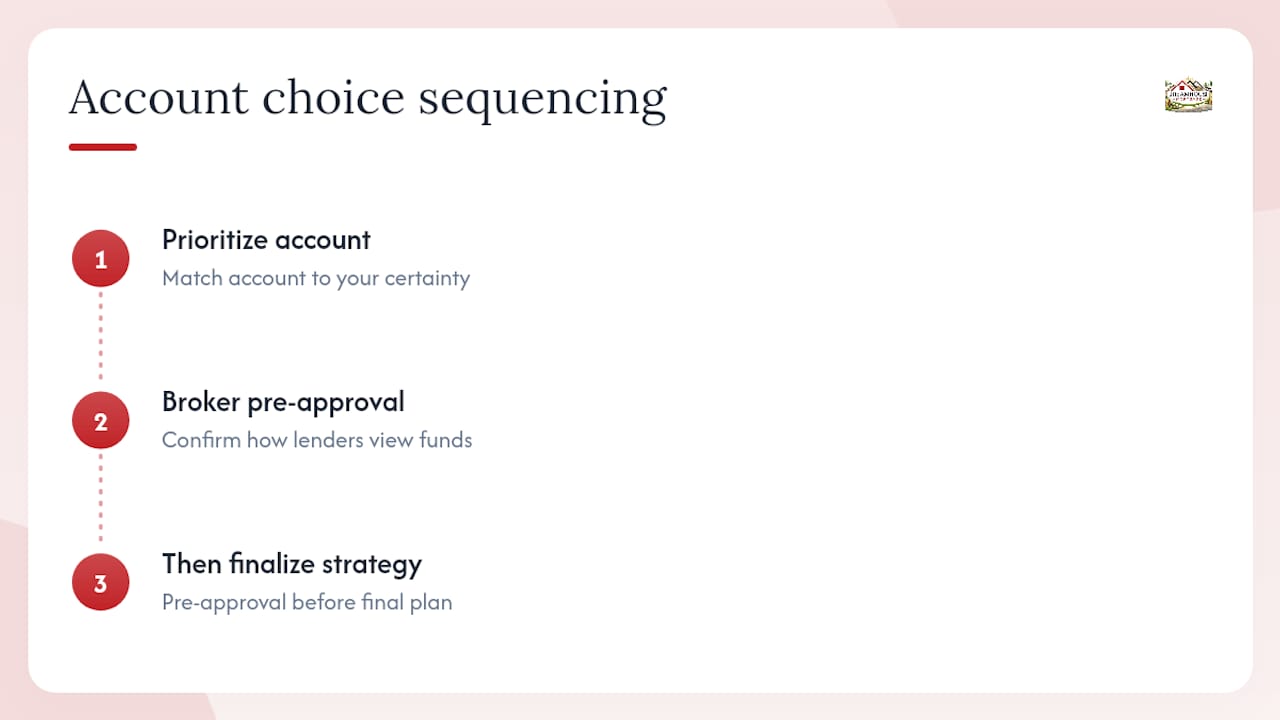
Where conventional advice really falls short is in ignoring how account choice interacts with mortgage readiness. A well-funded FHSA looks great on paper, but if you haven’t talked to a broker about how lenders view that money during pre-approval, you’re planning half a strategy. The FHSA’s combination of an upfront deduction with a tax-free withdrawal is genuinely unusual among Canadian registered accounts, and I think too many first-time buyers discover this feature only after they’ve already been contributing to a TFSA for years.
My take: prioritize the account that matches your certainty level, not the one with the better headline benefit. Then treat your pre-approval conversation as step two, not step ten. That sequencing, not the account itself, is what actually gets Calgary buyers into homes faster.
— Guriqbal Chahal, MBA, PMP
DreamHouse Mortgage: Turning Your FHSA and TFSA Savings Into a Calgary Home
Mortgage brokerage services offer an alternative to guessing your way through a bank’s pre-approval process. You get access to brokers who compare rates across banks, credit unions, and alternative lenders, so your FHSA and TFSA savings can translate into strong purchase power in Calgary, Airdrie, or Cochrane.

Whether you’re still deciding how to split contributions between accounts or you’re ready to start house hunting, a broker’s job is to make your savings work harder at the mortgage stage. DreamHouse Mortgage offers mortgage pre-approval, lender selection across dozens of options, down-payment planning, and first-time buyer guidance tailored to your income and timeline. A mortgage broker who negotiates rates on your behalf can often secure terms you wouldn’t find shopping a single bank alone, and pairing that with a clear FHSA or TFSA strategy means your down payment goes further.
Call Guriqbal Chahal, MBA, PMP, Mortgage Broker, at 403-966-6072, or visit the Google Business Profile to book a consultation and turn your savings plan into a mortgage plan.
Sources
This article is general information, not a substitute for advice from a qualified financial advisor. Consult a qualified financial professional about your own circumstances before acting on anything here.
FAQ
Is It Better to Put Money Into an FHSA or a TFSA?
For committed first-time buyers, the FHSA usually wins because contributions are deductible and qualifying withdrawals stay tax-free. If you’re unsure about buying or want unrestricted access, the TFSA is the safer choice.
Should I Max Out My TFSA or FHSA First?
Max the FHSA first if you’re certain you’ll buy within 15 years and have taxable income to benefit from the deduction; otherwise prioritize the TFSA and revisit the FHSA once your plans firm up.
What Is the Main Disadvantage of a TFSA for Home Saving?
The TFSA offers no tax deduction on contributions, so it doesn’t reduce your taxable income the way FHSA contributions do, even though withdrawals remain tax-free either way.
Can I Contribute to Both a TFSA and an FHSA in the Same Year?
Yes. In 2026 you can contribute up to $8,000 to an FHSA and $7,000 to a TFSA in the same calendar year, giving you $15,000 in combined tax-advantaged room.
What Happens if I Don’t Buy a Home After Opening an FHSA?
You can transfer the balance to an RRSP or RRIF tax-free without using your RRSP contribution room, as long as you do it within the FHSA’s 15-year window.
Recommended
- FHSA vs Home Buyers Plan Calgary: Which Saves You More?
- First Time Home Buyer Calgary Alberta: How Much Income Do You Need to Buy a Home in 2026?
- Mortgage Amortization Calculator: How Amortization Affects Your Calgary Mortgage Payment (20 vs 25 vs 30 Years)
- Best First-Time Home Buyer Mortgage in Calgary. 5 Top Tips!