
Alternative lending in Canada, often called B lending, provides mortgage funding through lenders outside the major banks for borrowers who don’t fit standard bank criteria. It suits self-employed Calgarians, newcomers, and buyers facing a tight closing deadline. The trade-off is real: faster approvals and flexible income rules, but higher interest, added fees, and shorter terms than a traditional A lender offers.
TL;DR:
- B lending in Canada is regulated but offers more flexible underwriting, prioritizing equity or alternative income verification over strict income ratios.
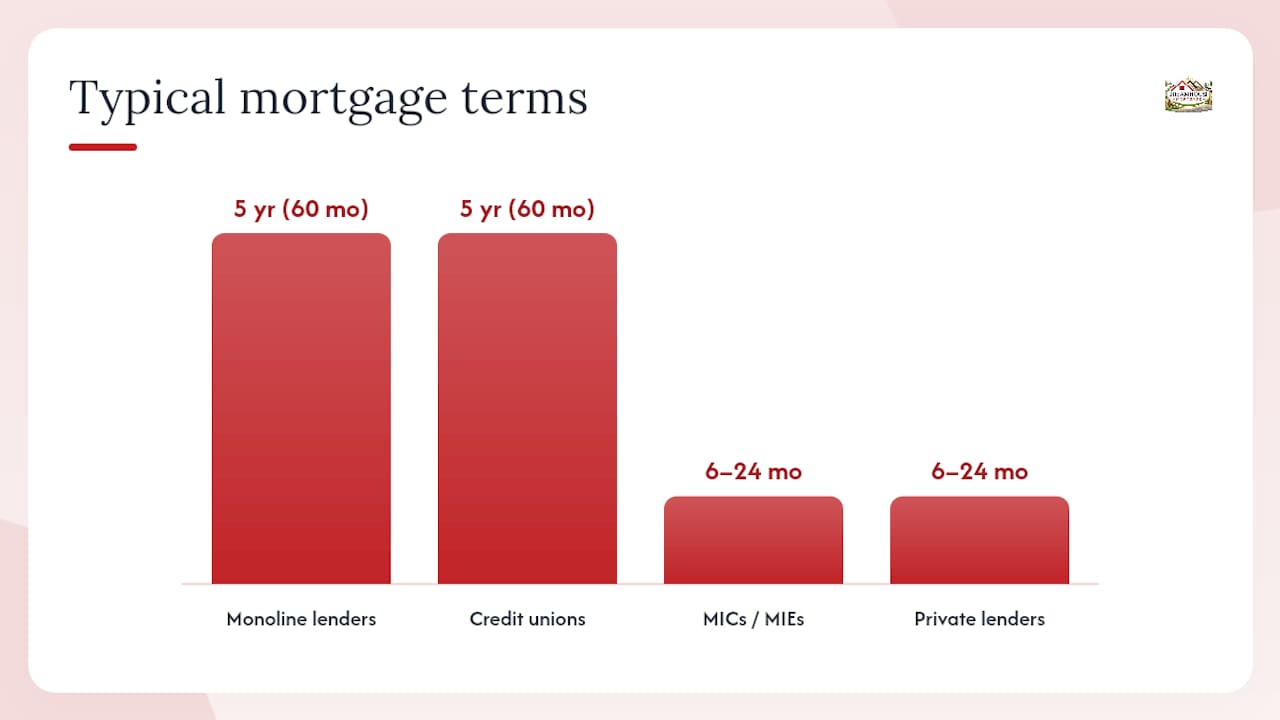
- Terms typically range from 6 to 24 months for MICs and private lenders, with rates higher than banks and additional fees often applying.
- It is most suitable for self-employed, newcomers, or urgent closings, but not for long-term, low-cost financing beyond a few years.
- A thorough exit plan, including refinancing to a bank, should be in place before signing, as private terms are short and renewal options are limited.
- Always verify licensing, full cost disclosure, and legal review to avoid predatory practices and ensure compliance with federal interest rate caps.
Table of Contents
- What Counts as Alternative Lending in Canada?
- The Real Advantages and Drawbacks of B Lending
- Who Should Actually Consider This, and When
- How Alternative Lenders Evaluate Your File
- Regulatory Protections Every Borrower Should Know
- Planning Your Exit Before You Sign
- How DreamHouse Mortgage Approaches Alternative Lending Locally
- Why Local Guidance Beats Generic Advice
- Get Local Guidance Before You Choose a Lender
- Sources
- FAQ
What Counts as Alternative Lending in Canada?
Alternative lending sits between the big banks and private, individual lenders on the risk spectrum. B lenders, a term borrowed from how the industry classifies “A” (bank) versus “B” (alternative) financing, are still regulated financial institutions. They just apply more flexible underwriting than a Schedule I bank, which makes them a practical fit for Calgary borrowers with non-traditional income.
Four provider categories show up most often in Alberta mortgage files:
- Monoline lenders: institutions that only offer mortgages (no chequing accounts or credit cards) and often price close to bank rates while accepting slightly outside-the-box income documentation.
- Credit unions: member-owned institutions such as those operating across Alberta that can offer more underwriting discretion than a national bank, particularly for local self-employed or rural borrowers.
- Mortgage Investment Corporations and Mortgage Investment Entities (MICs/MIEs): pooled-investor funds that lend against real estate equity rather than strict income ratios, common for construction, bridge, or short-term deals.
- Private lenders: individuals or small companies lending against property equity, typically for the shortest terms and highest flexibility, and usually arranged through a licensed mortgage broker.
The underwriting philosophy differs sharply by category. Bank and monoline lenders lean income-driven, meaning your debt service ratios and T4 or Notice of Assessment history carry the most weight. MICs, MIEs, and private lenders lean equity-driven: if you have strong, verifiable equity in a Calgary, Airdrie, or Cochrane property, a lender may fund the deal even when your credit or income documentation would get declined at a bank. Typical private lending in this equity-driven space advances up to roughly 75 to 80% loan-to-value on strong residential files, which is meaningfully more conservative than the 95% loan-to-value that some first-time buyers access through insured bank mortgages.
Terms also compress as you move down this list. A monoline mortgage might run a standard five-year fixed term. A MIC or private mortgage commonly runs six to 24 months, built as bridge financing rather than a long-term home loan. Most credit unions and all private-lender arrangements are typically sourced through a licensed mortgage broker, since these products aren’t marketed directly to the public the way bank rates are.
The Real Advantages and Drawbacks of B Lending
Choosing a B lender is rarely about preference. It’s usually about what actually gets approved, and that reality cuts both ways.
Advantages:
- Approval speed. Files that would sit in a bank’s underwriting queue for weeks can close in days once equity and title are confirmed.
- Flexible income evaluation. Self-employed borrowers, gig workers, and commission earners can qualify using bank statements or add-back calculations instead of a strict Notice of Assessment average.
- Access for newcomers. Buyers without two years of Canadian credit history often find a path here that a bank’s standard scorecard won’t offer.
- Investor-friendly terms. Rental and multi-unit purchases that exceed a bank’s exposure limits can still get funded through a MIC or private lender.
Drawbacks:
- Higher borrowing cost. Rate premiums over comparable bank pricing vary by file, but borrowers should expect a noticeably higher rate to offset the lender’s added risk.
- Lender and broker fees. Setup fees, renewal fees, and legal fees are common and add to the effective cost of the loan.
- Short terms with real deadlines. A 12-month private mortgage means you need a plan in place well before renewal, not after.
- Prepayment penalties. Some alternative products charge for paying out early, even though the term itself is short.
Pro Tip: Ask for the total cost of borrowing in dollars, not just the interest rate, before you sign anything. A low headline rate with a high lender fee can cost more over a 12-month term than a higher rate with no fee attached.
Every legally binding cost, including fees, bonuses, and penalties, factors into the interest rate ceiling set by federal law, which caps the effective annual rate on any loan in Canada at 35% under Criminal Code section 347. No legitimate lender in Calgary should be pricing anywhere close to that ceiling, but the rule exists precisely so borrowers have a hard backstop against predatory structuring.
Who Should Actually Consider This, and When
Alternative lending earns its place for specific situations, not as a general first choice.
It tends to make sense when you’re self-employed with income that looks strong on your bank statements but thin on paper after write-offs, when you’re new to Canada and still building a credit file, or when a closing date is approaching and a bank’s timeline simply won’t get there. Investors picking up a second or third rental property in Chestermere or Okotoks sometimes hit a bank’s debt-servicing ceiling and need a MIC or private option to complete the purchase on schedule.
It’s a poor fit when you actually need 25 to 30 years of stable, low-cost financing and a bank or credit union product is realistically within reach. Paying a private lending premium for a decade when a bank approval was available is money left on the table.
Watch for these warning signs before signing, including skipping independent legal review as highlighted in this Florida guide to balloon payment legal issues, even though it is a US jurisdiction example and not Canadian law:
- A lender who won’t provide a written cost breakdown before funding.
- Pressure to skip independent legal review.
- No clear renewal or exit conversation before you commit.
- Fees that seem to shift after you’ve already started the process.
How Alternative Lenders Evaluate Your File
Documentation looks different at a B lender than at a bank, and knowing what to prepare saves real time.
For self-employed borrowers, lenders commonly accept a combination of two years of Notices of Assessment, business financial statements, and bank statements, sometimes paired with add-back calculations that credit you for non-cash business deductions. Working through a broker who understands self-employed mortgage documentation in Calgary tends to produce a cleaner, faster file than applying cold.
Loan-to-value expectations shift by lender type: monoline and credit union products often mirror bank ratios, while MICs and private lenders typically cap out around 75 to 80% loan-to-value on equity-driven files. Down payment or equity requirements rise accordingly, and terms compress from the standard five-year bank cycle down to six, 12, or 24 months for most private arrangements.
A practical application sequence looks like this:
- Get a clear picture of your equity position or down payment before approaching any lender.
- Gather two years of income documentation, even if it’s self-employed statements rather than T4s.
- Work with a licensed broker who can match your file to the right lender type for self-employed borrowers rather than applying to lenders one at a time.
- Ask about stated income options if your paperwork doesn’t fully reflect your actual cash flow.
- Review the full cost disclosure, including all fees, before signing a commitment letter.
Questions worth asking any broker or lender before you commit:
- What is the total cost of borrowing, in dollars, over the full term?
- Is there a prepayment penalty, and how is it calculated?
- What does the renewal process look like if my situation hasn’t changed by term end?
- Are there add-back income calculations available that could improve my qualifying ratios?
Regulatory Protections Every Borrower Should Know
Canada’s mortgage market isn’t a free-for-all, even in the alternative lending space. Federal law caps the effective annual interest rate on any consumer loan at 35% under Criminal Code section 347, and that calculation must include fees, bonuses, and penalties, not just the stated rate.
Provincially, Ontario’s Financial Services Regulatory Authority found that private mortgage lenders accounted for 16.8% of the number and 13.3% of the value of residential mortgages in 2023, with non-individual private lenders showing the largest market share growth. That kind of provincial regulator oversight, paired with CMHC’s national market reporting, gives borrowers a way to check whether a lending trend is mainstream or fringe.
Before you fund anything, take these verification steps:
- Confirm the mortgage broker or lender is licensed through your province’s financial services regulator.
- Request full cost disclosure in writing, not verbally.
- Have an independent lawyer review the commitment letter before you sign.
- Ask the Financial Consumer Agency of Canada resources if you’re unsure how a disclosure compares to standard practice.
Planning Your Exit Before You Sign
The most common mistake borrowers make with alternative financing isn’t the rate. It’s signing without a written exit strategy, which is the single pitfall brokers flag most often across the industry.
Because most alternative and private terms run six to 24 months, you need a plan the day you fund, not the month before renewal. Build it around these steps:
- Set a calendar reminder at the halfway point of your term to review your credit and income position.
- Work on credit repair immediately if that was the reason you needed a B lender in the first place.
- Season your income, meaning build a longer track record of deposits or Notices of Assessment that a bank underwriter can rely on.
- Track your property’s equity growth, since rising home values can shift you back into A-lender territory.
- Get pre-approved by an A lender roughly 90 days before your term ends, so you have a fallback ready either way.
Pro Tip: If your income has stabilized, refinancing into a bank or credit union product before your private term matures almost always beats renewing at the same rate. Start that conversation with your broker at least three months out, not three weeks out.
How DreamHouse Mortgage Approaches Alternative Lending Locally
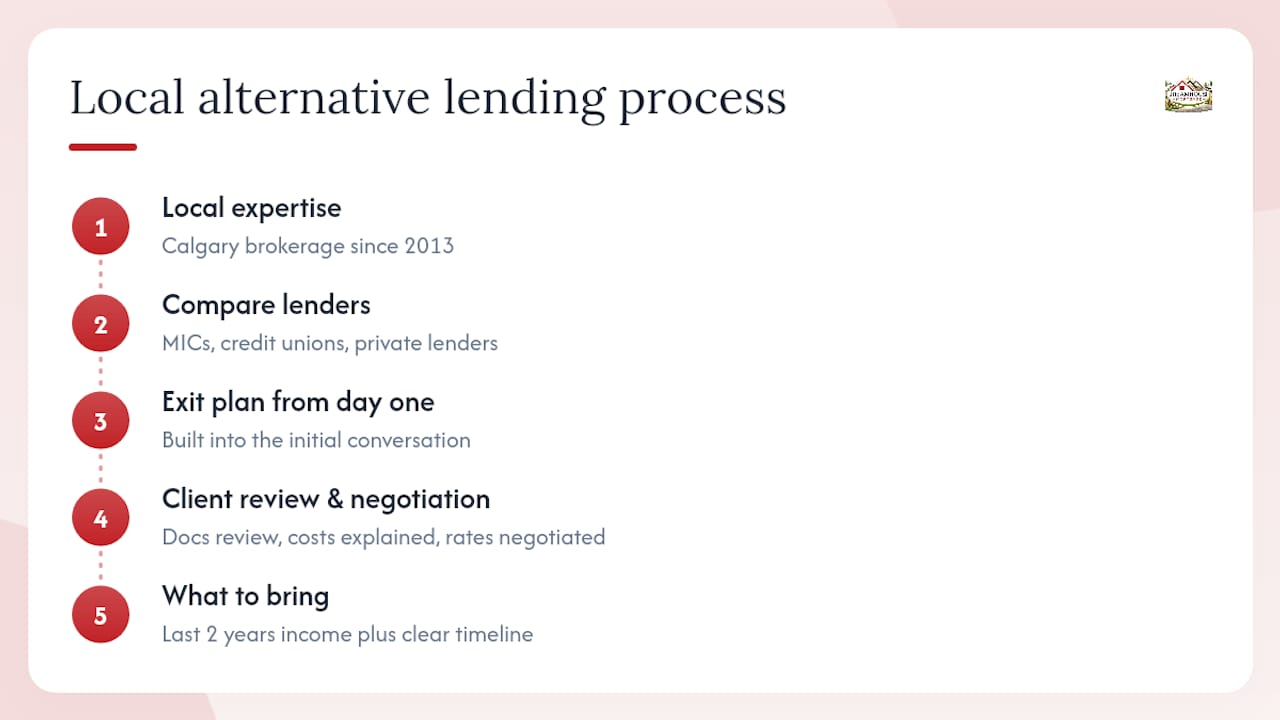
A mortgage brokerage headquartered in Calgary has served Alberta clients since 2013 under Broker of Record Guriqbal Chahal, MBA, PMP. That local footprint matters when a file involves a MIC, a credit union, or a private lender, since access and pricing on these products vary by region and relationship, not just by credit score.
When a Calgary, Cochrane, or Airdrie client’s file doesn’t fit a bank’s standard box, the brokerage compares alternative options across its lender network and builds the exit plan into the conversation from day one, not as an afterthought at renewal. Clients working with the team should expect a documentation review, a straightforward explanation of costs, and a rate negotiation process handled on their behalf. Bring your last two years of income documentation and a clear sense of your timeline to get the most out of that first conversation.
Why Local Guidance Beats Generic Advice
Most articles on alternative lending treat it as a national abstraction, a set of definitions with no connection to what actually closes in Calgary, Airdrie, or Cochrane. That’s backwards. The Criminal Code cap and the CMHC market data matter, but they only become useful once someone applies them to your specific file, your specific closing date, and your specific renewal calendar.
The conventional advice, “avoid alternative lending if you can,” misses the point for a growing share of Alberta borrowers. Non-bank lenders funded 30.4% of new mortgages nationally in Q4 2024, which tells you this is a mainstream tool, not a last resort. What actually protects you isn’t avoiding the category. It’s pairing it with a broker who treats the exit plan as part of the approval, not an afterthought once your term is already running out.
— Guriqbal Chahal, MBA, PMP
Get Local Guidance Before You Choose a Lender
Banks, credit unions, monoline lenders, and private lenders all have a place in a Calgary borrower’s toolkit, and none of them is automatically the wrong answer. What matters is matching your file, your timeline, and your equity position to the right one, and knowing your exit plan before you fund. A mortgage brokerage works directly with lenders across all of these categories, so you’re not stuck negotiating alone or guessing which product actually fits your situation.

Bring two years of income documentation, your current mortgage statement or purchase agreement, and a clear sense of your closing date, and Guriqbal Chahal, MBA, PMP can walk you through which lender category makes sense and what your rate negotiation options look like before you commit to anything. If you’re already on a private or alternative term and thinking about your next move, refinancing back to an A lender is often more straightforward than borrowers expect once income and credit have stabilized. Call DreamHouse Mortgage at 403-966-6072 or find the team through its Google Business Profile to book a consultation.
Sources
For readers who want to verify the figures and rules covered above, these Canadian sources are worth bookmarking: the CMHC residential mortgage industry report for market share trends, the FSRA private lending report for provincial oversight data, the Criminal Code for the federal interest rate cap, and the Financial Consumer Agency of Canada for consumer disclosure guidance.
This article is general information, not a substitute for advice from a qualified financial advisor. Consult a qualified financial professional about your own circumstances before acting on anything here.
- Private Residential Mortgage Lending in Ontario Report 2023 (FSRA)
- Criminal Code (Consolidated) — Justice Laws Website
FAQ
Is Alternative Lending Legit in Canada?
Yes. Alternative lenders, including monoline lenders, credit unions, and regulated MICs, operate as licensed financial institutions, and Ontario’s FSRA reports private lenders funded 16.8% of mortgage transactions in 2023, showing this is an established part of the market rather than a fringe activity.
Can a 70-Year-Old Borrower Get a 30-Year Mortgage in Canada?
Age alone doesn’t disqualify a borrower, but lenders assess retirement income, assets, and repayment ability rather than assuming a fixed working life; some alternative lenders are more flexible on this than banks, and a broker can identify which lenders will consider your specific income sources.
What Is the Easiest Mortgage to Get Approved for in Canada?
There’s no single “easiest” mortgage, but equity-driven products from MICs or private lenders are often the most accessible for borrowers with strong home equity but non-traditional income or credit, since approval leans on the property rather than a strict income formula.
What Is Alternative Lending and How Does It Work?
Alternative lending, or B lending, refers to mortgage financing from monoline lenders, credit unions, MICs, MIEs, or private lenders rather than a major bank; it works by weighing equity and flexible income documentation more heavily, which lets borrowers who don’t meet standard bank ratios still secure funding, typically at a higher rate and for a shorter term.
Recommended
- Best mortgage Alternatives for Alberta Buyers in 2026
- The Ultimate Guide to B-lender mortgage Calgary: Alt‑A & B‑Lender Mortgages—When and Why to Use Them
- Bad Credit Mortgage Calgary: Shocking Truths, 3 Powerful Options & Real Approval Paths
- Mortgage Broker vs. Bank Calgary Alberta: The Shocking Truth Nobody Tells You [2026]