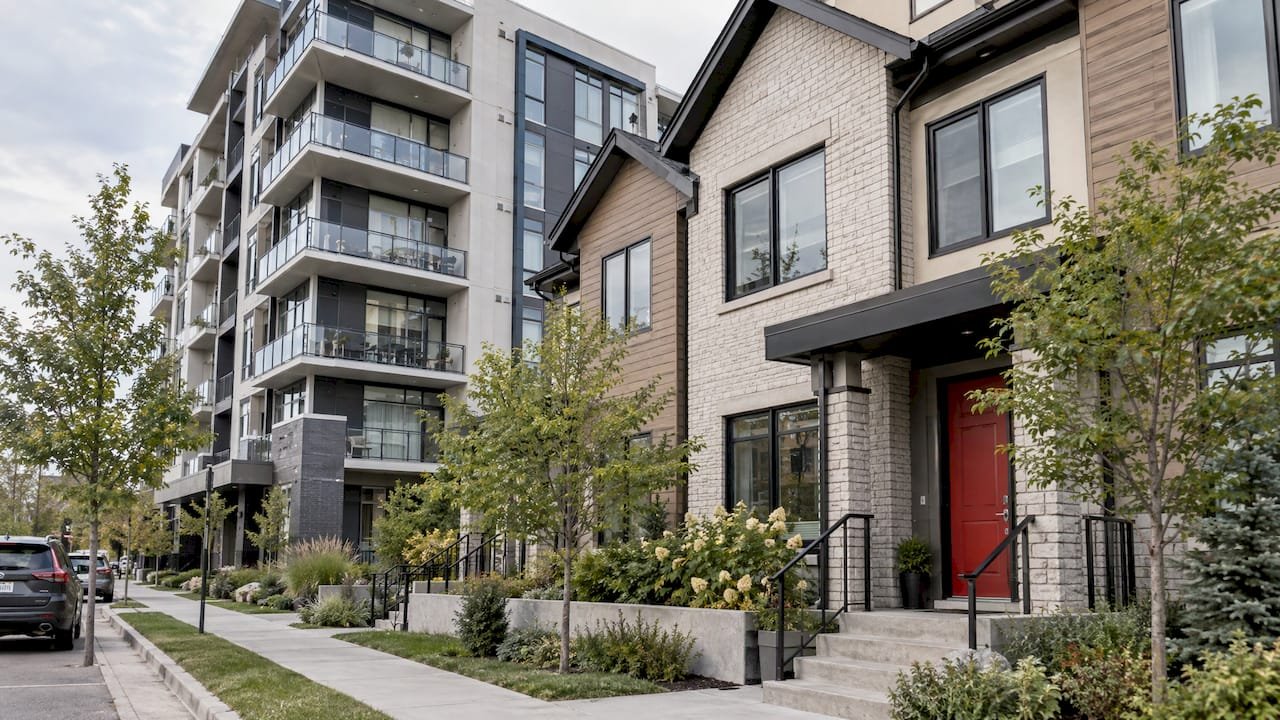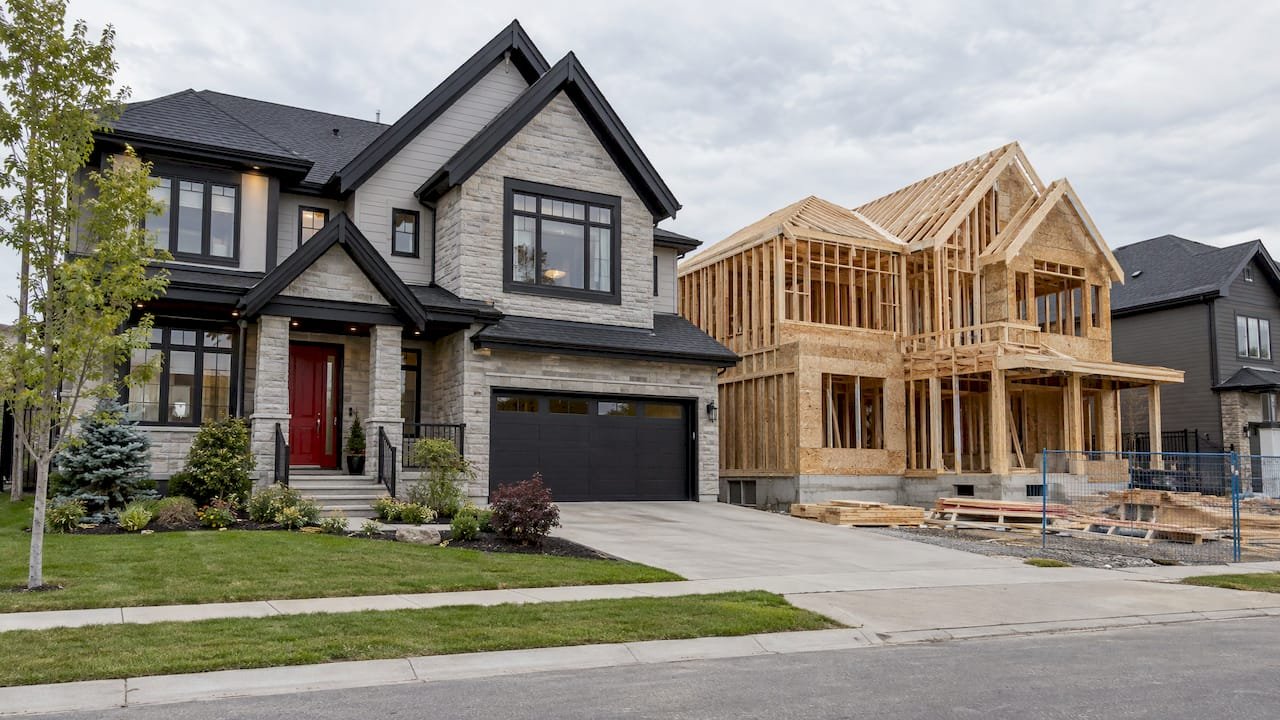
You can lower a mortgage payment in five main ways: get a lower rate at purchase or renewal, extend the amortization, switch lenders or refinance, change how you pay, or consolidate higher-interest debt into the mortgage. Each one changes either the rate, the length or the balance, and each has a cost that the monthly figure alone does not show. A Calgary mortgage broker can compare lenders across all of these at once, which is why this is the first call we suggest for first-time buyers in Calgary, Airdrie and Cochrane, and for owners approaching renewal.
TL;DR
- Payment = balance, rate and amortization. Lowering any one lowers the payment; the question is what it costs you later.
- A longer amortization gives the biggest monthly drop, but on the Government of Canada’s own example it adds tens of thousands in interest.
- Renewal is the easiest moment to cut your rate. Your lender must send a renewal statement at least 21 days before the term ends, and you can bring competing offers.
- Breaking a closed mortgage mid-term can trigger a penalty, so check the number before you switch, or use a blend-and-extend.
- First-time buyers in Calgary can now access 30-year insured amortizations, which lowers the starting payment.
Table of Contents
- What actually sets your monthly payment
- Get a lower rate: the cleanest reduction
- Extend the amortization: the biggest drop, and the highest lifetime cost
- Use renewal to reset the rate
- Refinance or switch mid-term: check the penalty first
- Consolidate higher-interest debt into the mortgage
- Change how you pay: frequency and prepayments
- If you are struggling to make payments
- Which option fits your situation
- Promo: a Calgary broker who compares the market for you
- Our perspective
- FAQ
- Sources
What actually sets your monthly payment
Three numbers decide it: how much you borrow, the interest rate, and the amortization, which is the total number of years the mortgage is scheduled to take to pay off. The term is different. It is the length of your current contract with the lender, commonly five years, after which you renew at whatever rate is then on offer.
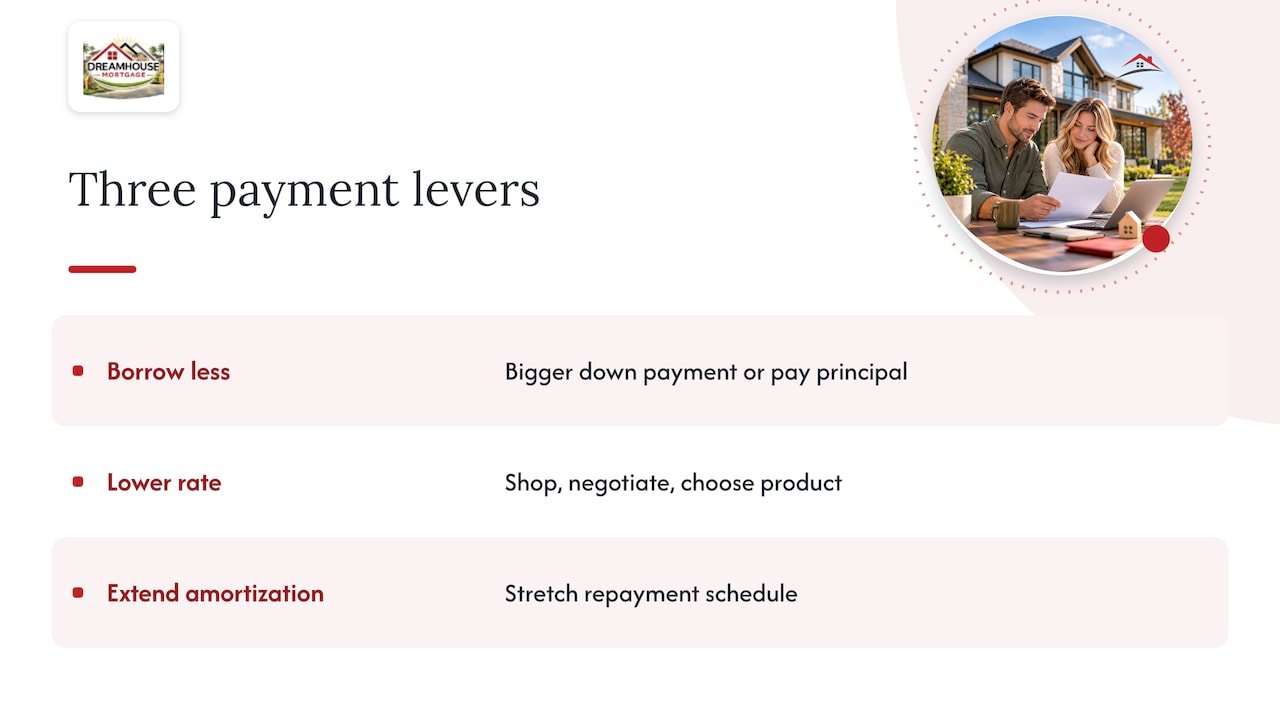
That means there are really only three levers. You can borrow less (a bigger down payment, or paying down principal), pay a lower rate (shopping lenders, negotiating at renewal, choosing the right product), or stretch the repayment schedule. Everything else in this article is a way of pulling one of those three.
For a buyer in Calgary, where many first homes are condos in the Beltline, townhomes in Mahogany or Livingston, or detached homes in Airdrie and Cochrane, the lever you pull first is usually the rate and the amortization, because the price and down payment are already fixed by the time you apply.
Get a lower rate: the cleanest reduction
A lower rate cuts your payment without adding years to the loan, so it is the reduction with the least downside. Rates differ between lenders, and between products from the same lender, depending on the down payment, whether the mortgage is insured, the term, and whether it is fixed or variable.
A fixed rate stays the same for the term. A variable rate moves with the lender’s prime rate. Which one gives the lower payment depends on the rates on offer on the day you apply, and those change often, so any rate printed in an article is out of date quickly. Compare live quotes, not headlines.
This is where working with a broker matters. DreamHouse Mortgage works with banks, credit unions, monoline lenders, alternative lenders and private lenders, so one application is compared across many products instead of one bank’s menu. We explain how that comparison plays out in our guide to getting a lower mortgage rate in Alberta, and how the conversation with a lender works in our explanation of broker rate negotiation.
What a small rate difference is worth
The Financial Consumer Agency of Canada (FCAC), the federal consumer protection agency, shows how sensitive the payment is to amortization. Rate works the same way: a mortgage at 4% and one at 5% on the same balance and schedule differ by tens of dollars per month for every $100,000 borrowed. Over five years, that is real money, which is why we ask every client to compare more than one quote.
Extend the amortization: the biggest drop, and the highest lifetime cost
Stretching the schedule is the fastest way to a smaller payment. The FCAC’s mortgage terms and amortization page shows what it does on a $300,000 mortgage at 4%:
| Amortization | Monthly payment | Total interest |
|---|---|---|
| 10 years | $3,033 | $63,919 |
| 15 years | $2,214 | $98,541 |
| 20 years | $1,813 | $135,057 |
| 25 years | $1,578 | $173,418 |
Going from 20 to 25 years lowers the payment by $235 a month and adds $38,361 of interest. The FCAC’s mortgage relief page makes the same point at 5%: 20 years means 240 payments of $1,971.38, while 30 years means 360 payments of $1,601.07, and total interest rises from $173,130 to $276,386.
So a longer amortization is a tool for cash flow, and it works best when you plan to use it deliberately: start with the lower payment, then use prepayments (below) to shorten the schedule when your income grows.
The 30-year option for first-time buyers
The maximum amortization depends on your down payment. With less than 20% down, the mortgage is insured, and the FCAC states the maximum is 30 years for first-time buyers and/or new builds, and 25 years otherwise. With 20% or more down, the lender sets the maximum.
This follows Finance Canada’s 2024 reforms, which expanded 30-year insured amortizations to all first-time homebuyers and all new-build buyers, and raised the insured-mortgage price cap from $1 million to $1.5 million, effective December 15, 2024. For a Calgary first-time buyer putting 5% to 10% down, that is a meaningful way to bring the starting payment into range. We walk through the options in our guide to mortgage amortization options in Canada and the rules and costs in our page on extending amortization.
Pro Tip: when you choose a 30-year schedule, ask your broker to set up a prepayment plan at the same time. The lower payment protects your budget in the first years; the extra payments keep the lifetime interest in check.

Use renewal to reset the rate
If you already own a home in Calgary, Chestermere or Okotoks, renewal is the point where your rate is open to change without a penalty. The FCAC’s renewal guidance says federally regulated lenders must send you a renewal statement at least 21 days before the term ends, showing your balance, rate, payment frequency, term and fees.
Two details from that page are worth acting on:
- You can negotiate a discounted rate by presenting offers from other lenders or brokers. Proof may be required, so keep the written quotes.
- If you do nothing, the mortgage may renew automatically, at the rate in the lender’s offer.
The renewal statement is a starting point, not a final price. A broker can obtain competing offers on your behalf and bring them back to your current lender or move you to a new one. We cover the process in negotiating a better mortgage renewal rate in Alberta, the role of a mortgage broker at renewal and why many Canadians overpay at renewal.
Switching lenders at renewal
Switching used to mean requalifying under the stress test, the rule that makes you qualify at a higher rate than you will actually pay. Under the strengthened Canadian Mortgage Charter, Finance Canada notes that insured mortgage holders can switch lenders at renewal without another stress test. That removes a barrier for many Alberta homeowners who were previously told to stay put.
Our Renew or Switch service is built around this decision: compare your lender’s renewal offer against the wider market before you sign.
Refinance or switch mid-term: check the penalty first
Sometimes you cannot wait for renewal. Rates may have dropped, or your budget has changed. Breaking a closed mortgage early normally carries a cost, so the question is whether the savings exceed it.
The FCAC explains that breaking a closed mortgage normally incurs a prepayment penalty that can cost thousands of dollars, plus possible administration, appraisal, reinvestment and discharge fees, and that any cash back you received may have to be repaid. An open mortgage can be broken without a prepayment penalty.
Forbes Advisor Canada explains that for a fixed-rate closed mortgage the penalty is typically the greater of three months’ interest or the interest rate differential (IRD, which compares your rate with the lender’s current rate for your remaining term). Variable-rate closed mortgages usually carry a three-months’ interest penalty. Its example: a $250,000 mortgage at 5% with 36 months left, against a 4% current rate, gives a $7,500 IRD.
Blend-and-extend: lower the rate without the penalty
A blend-and-extend combines your existing rate with a current rate and starts a new term. The FCAC says it avoids the prepayment penalty, though administrative fees may apply. Its example blends $200,000 at 5.5% with 24 months left and a 4% five-year rate to 4.6% for 60 months. Your payment falls, and you do not pay to break the contract.
The right choice between a straight break, a blend, or waiting depends on your penalty calculation, which varies by lender. Bring us your mortgage statement and we will work through the options with you. See our Mortgage Refinancing service for equity and refinance questions in Calgary and across Alberta.
Consolidate higher-interest debt into the mortgage
Your monthly obligations are bigger than the mortgage payment alone. Credit cards, lines of credit and car loans usually carry higher rates than a mortgage. Rolling them into a mortgage at renewal or refinance can replace several payments with one lower combined payment, and the FCAC’s renewal page lists consolidating higher-interest debts among the things to review when you renew.
This changes your total monthly outlay, not only the mortgage line, and it can improve your qualification for future borrowing. Because the debt is now spread over the mortgage amortization, the sensible approach is to pair it with a plan to pay it down faster. We explain how it works in Debt Consolidation Mortgage in Calgary and offer a Debt Consolidation service for Calgary homeowners.
Change how you pay: frequency and prepayments
These options do not usually lower the required payment, but they shrink the balance and the interest, which lowers what you owe at renewal and gives you room to choose a smaller payment later.
The FCAC’s guidance on paying off your mortgage faster says:
- Accelerated weekly or biweekly payments add up to one extra monthly payment per year and can save interest.
- Lump-sum prepayments are limited by your mortgage contract, so check the annual maximum before you plan one.
- Increasing your regular payment shortens the payoff time, but normally cannot be reversed until the term ends.
That last point matters if your goal is a lower payment. If you raise your regular payment, you may not be able to lower it again mid-term. Lump sums are more flexible: you pay down principal when you can, and keep the required payment where it is.
Our article on how to pay down your mortgage faster gives seven Alberta-specific tips, including how to read prepayment privileges in a lender’s contract.
If you are struggling to make payments
If your payment has become hard to meet, speak to your lender or a broker early. The FCAC’s mortgage relief options list short-term measures that lenders may offer:
- Payment deferrals, usually up to four months.
- Skip-a-payment options, limited to a set number per calendar year.
- Interest-only arrangements, where deferred principal is usually capped (typically $10,000) and repaid within a set timeframe, usually two years.
- Extended amortization. Federally regulated banks must develop a plan with borrowers at risk of default that covers options to restore the original period and the long-term cost.
These are relief tools, and every one of them has a cost in interest or time. Talk to your lender or to us before missed payments occur, because more options are open to you earlier.
Which option fits your situation
| Your situation | First move to consider |
|---|---|
| First-time buyer in Calgary, under 20% down | 30-year insured amortization, compared across lenders |
| Renewal due in the next 4 months | Collect competing rate offers; consider switching |
| Rate far above today’s market, mid-term | Compare the penalty with the savings; consider blend-and-extend |
| Multiple high-interest debts | Debt consolidation at refinance or renewal |
| Stable income, want long-term savings | Biweekly accelerated payments and annual lump sums |
| Self-employed or new to Canada | Lender selection matters most; speak to a broker first |
A payment that is too low can be as risky as one that is too high, because it can hide a long schedule. The aim is the lowest payment you can hold comfortably while keeping total interest where you want it.
Promo: a Calgary broker who compares the market for you
DreamHouse Mortgage is an Alberta mortgage brokerage headquartered in Calgary and founded in 2013. We help first-time buyers, homeowners, investors, self-employed professionals and newcomers to Canada across Calgary, Airdrie, Cochrane, Chestermere, Okotoks, High River, Rocky View County, Edmonton and Red Deer. Our services include first-time buyer mortgages, pre-approvals, refinancing, renewals and debt consolidation, with access to banks, credit unions, monoline, alternative and private lenders.

If you want to see what a lower payment looks like for your own numbers, call Guriqbal Chahal, MBA, PMP, Mortgage Broker, at 403-966-6072. You can also find us on our Google Business Profile. If you are buying your first home, start with our Calgary first-time homebuyer mortgage guide and our pre-approval page.
Our perspective
We see the payment question as a planning question. A lower payment is only useful if it fits the rest of your financial life, so we start with your goals: the home you want in Calgary, Airdrie or Cochrane, your income, your other debts, and how long you plan to stay.
Our approach is client-first. Because we work with banks, credit unions, monoline, alternative and private lenders, we can compare rate, term, prepayment privileges and penalty terms side by side, and we explain each trade-off in plain language. For first-time buyers, that includes how the 30-year amortization now available to them changes the starting payment. For homeowners at renewal, it means bringing competing offers to the table instead of accepting the first renewal letter.
We also believe in education and long-term planning. Ask us about the cost of every option, and we will show you the lifetime interest next to the monthly saving, so you choose with both numbers in front of you.
Guriqbal Chahal, MBA, PMP
FAQ
What is the fastest way to lower my monthly mortgage payment?
Extending the amortization produces the largest immediate drop, and a lower rate at renewal or through a switch lowers the payment without lengthening the loan. On the FCAC’s $300,000 example at 4%, moving from a 20-year to a 25-year schedule lowers the payment from $1,813 to $1,578. A broker can show you both routes with your numbers.
Can I lower my payment before my term ends?
Yes, but a closed mortgage normally carries a prepayment penalty if you break it, and other fees may apply. A blend-and-extend can lower your rate without the penalty, though administrative fees may apply. Ask your broker to compare the penalty with the savings before you decide.
Do first-time buyers in Calgary get longer amortizations?
Yes. For insured mortgages, the maximum is 30 years for first-time buyers and/or new builds, and 25 years otherwise, according to the FCAC. A longer schedule lowers the monthly payment but increases the total interest, so many buyers pair it with regular prepayments.
Does paying biweekly lower my payment?
No, it does not lower the required payment. Accelerated biweekly or weekly payments equal one extra monthly payment a year, which reduces interest and shortens the payoff time. If your goal is a lower required payment, look at your rate or amortization at renewal.
Should I let my mortgage renew automatically?
Automatic renewal can happen if you take no action, and it renews at the lender’s offered rate. You have a renewal statement at least 21 days before the term ends from federally regulated lenders, which gives you time to gather competing offers. Call us at 403-966-6072 and we will compare the market for you.
Sources
- Mortgage terms and amortization, Financial Consumer Agency of Canada
- Mortgage relief options, Financial Consumer Agency of Canada
- Renewing your mortgage, Financial Consumer Agency of Canada
- Breaking your mortgage contract, Financial Consumer Agency of Canada
- Paying off your mortgage faster, Financial Consumer Agency of Canada
- Government announces mortgage reforms, Department of Finance Canada
- What Happens If You Break Your Mortgage Contract, Forbes Advisor Canada
Recommended
- Calgary Mortgage Calculators 2026: Avoid Costly Payment Mistakes & Estimate Your Monthly Mortgage Accurately
- Affordable Mortgage Payments
- Mortgage Amortization Calculator: How Amortization Affects Your Calgary Mortgage Payment (20 vs 25 vs 30 Years)
- Debt Consolidation Mortgage Calgary – Powerful Home Equity Strategy to Eliminate Debt