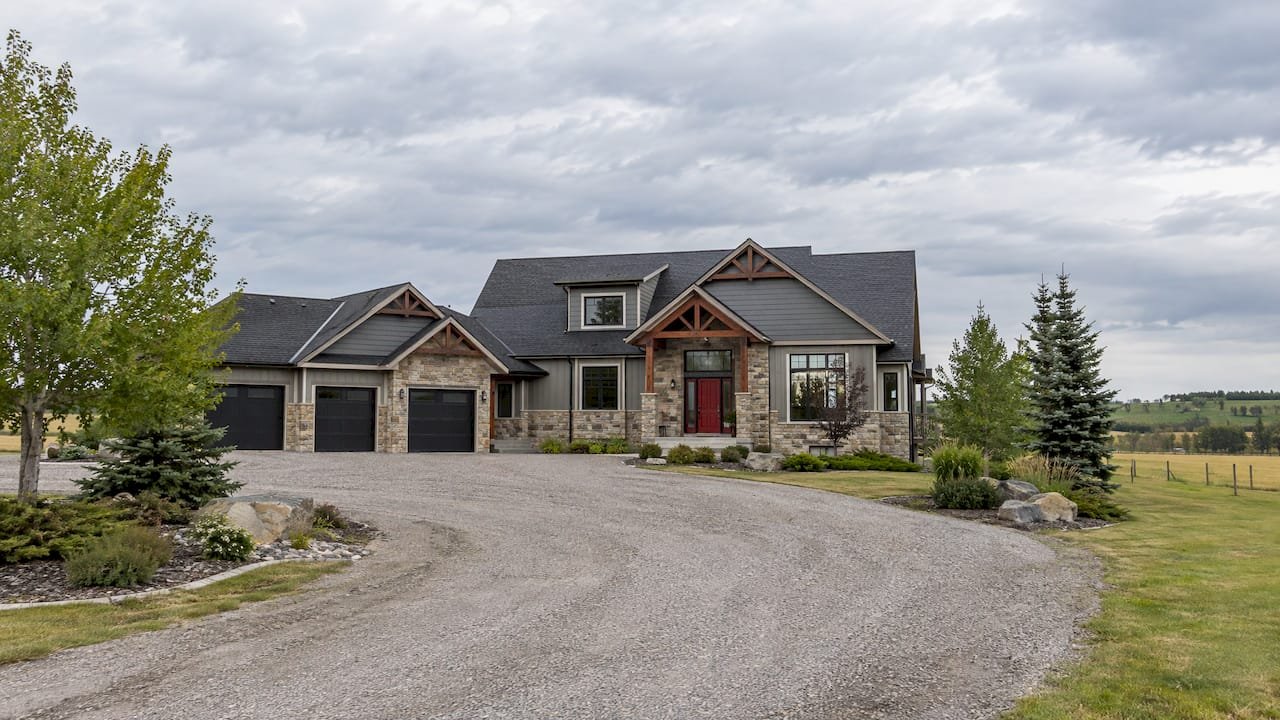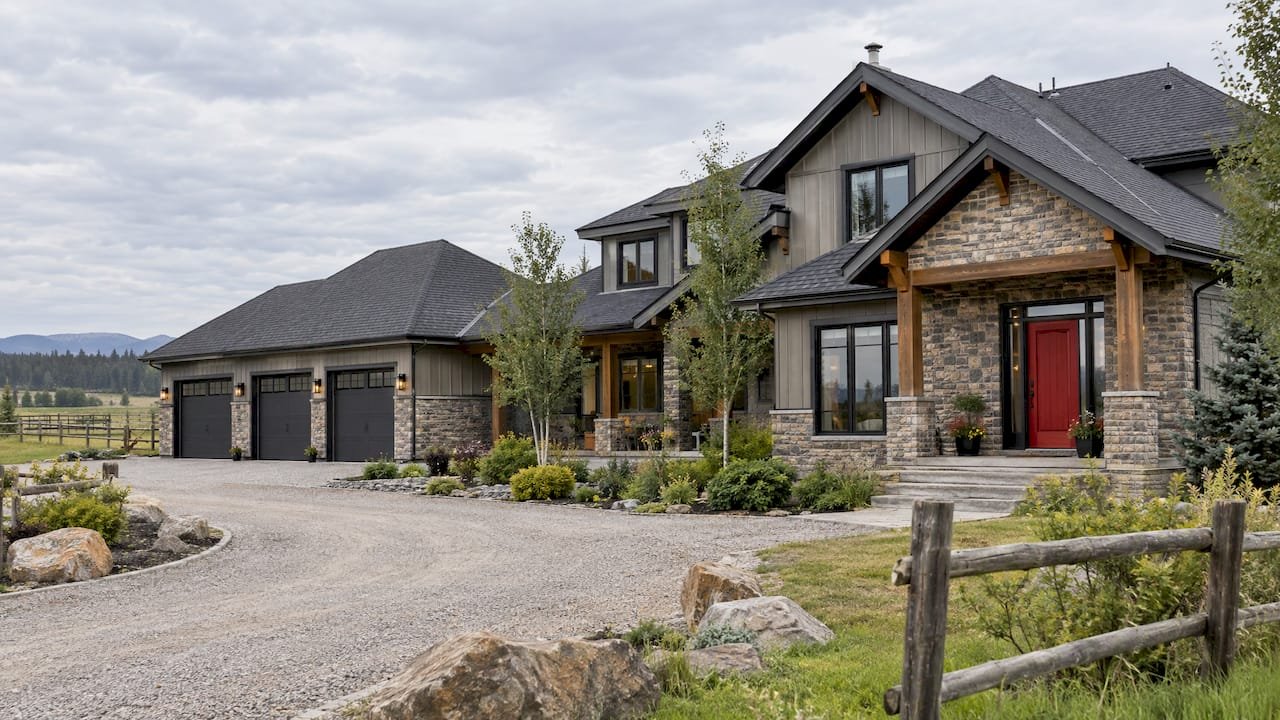
A rural property mortgage in Alberta is a residential mortgage on an acreage or country home, and it is underwritten more closely than a city mortgage because lenders look at the land, the water supply, the road access and the zoning as well as you. For a first-time buyer near Calgary, Cochrane, Airdrie, Chestermere or Rocky View County, the practical answer is to settle the financing before you fall for a property: with 5% to 20% down, an insured mortgage is possible on many country homes that meet the insurer’s rules, and a broker with access to several lender types can match the property to the right one. We can walk you through it: call Guriqbal Chahal, MBA, PMP, Mortgage Broker, at 403-966-6072.
TL;DR
- Insured (high-ratio) mortgages are available for rural homes that meet the insurer’s rules: residential zoning, potable water, year-round access and personal, non-commercial use.
- On the insured route, the lending value counts the home and up to 15 acres. Larger parcels, farms and raw land are reviewed differently or are not eligible.
- The minimum down payment is 5% on the first $500,000, 10% on the portion from $500,000 to $1.5 million, and 20% at $1.5 million or more.
- A basement suite can help or complicate a file, depending on whether it is legal, self-contained and compliant with municipal zoning.
- Get a pre-approval first, then confirm the property’s water, access and zoning before you remove conditions.
Table of Contents
- What Makes a Rural Mortgage Different From a City Mortgage
- Which Rural Properties Qualify for Residential Financing
- How Much Down Payment You Need
- What Lenders Check on a Rural File
- Basement Suites on Alberta Properties
- Step by Step: Financing Your First Rural Property
- Fixed or Variable on a Country Property
- Self-Employed and Newcomer Buyers in the Country
- Our Perspective
- Talk to a Calgary-Area Mortgage Broker
- FAQ
- Sources
What Makes a Rural Mortgage Different From a City Mortgage
In a city purchase, the lender is mostly judging you and a standard lot with municipal water, sewer and a paved street. On an acreage, the lender also judges the property’s marketability: how easily it could be resold if something went wrong.
Mortgage insurers publish the rules that most high-ratio lending follows. Sagen’s underwriting guidelines require residential zoning and compliance with municipal bylaws. For acreages, Sagen limits the lending value to the dwelling and 15 acres, and it refers larger parcels for review. It also requires potable water, meaning water that is safe to drink, and it expects lenders to disclose any negative marketability characteristics before funding.
In plain terms, five things decide whether a rural home finances smoothly:
- Acreage size. A home on a few acres near Cochrane or Airdrie looks like a residential file. A quarter section does not.
- Zoning. The land must be zoned for residential use and the home must comply with local bylaws.
- Water and services. A well or cistern must supply potable water. Septic systems are common in country residential areas and are part of the appraisal conversation.
- Access. CMHC’s purchase program requires year-round vehicular access and a home suitable for full-time, year-round occupancy. A seasonal cabin down a trail does not fit that description.
- Use. Insured lending is for personal use. Commercial activity such as farming or income-producing outbuildings is outside Sagen’s rules.
A property that clears all five usually finances on terms close to a city home. A property that misses one does not mean no mortgage, but it changes which lender and which structure fit.
Which Rural Properties Qualify for Residential Financing
The type of property sets the type of mortgage. Here is how the main categories line up.
| Property | Typical financing path | Down payment direction |
|---|---|---|
| Country home on a small acreage (residential zoning, within 15 acres) | Residential mortgage, insured or conventional | From 5% if it meets insurer rules |
| Larger acreage or hobby farm | Referred for review, or a lender that handles larger parcels | Often more than the insured minimum |
| Working farm or agricultural operation | Agricultural or commercial financing | Set by the lender |
| Vacant land or raw land | Land financing, not mortgage insurance | Typically more than a home purchase |
| Detached home in a hamlet or town (Cochrane, Airdrie, Chestermere) | Standard residential mortgage | From 5% |
Sagen lists detached, semi-detached, row-townhouse and apartment properties as eligible for insured residential financing, and it treats raw land and commercial or industrial properties as ineligible for mortgage insurance. An owner-occupied home with one to four units can qualify, subject to its other criteria.
If you are comparing parcels, start with the closest-to-residential option. A home inside a town limit or on a modest acreage keeps your down payment low and your lender choices wide. If your plan involves a larger parcel or land only, read our guides on avoiding a 50% down payment on Alberta acreage mortgages and the Calgary buyer’s checklist for an Alberta land mortgage. If you want to build rather than buy, our construction mortgage guide explains the draw schedule.
How Much Down Payment You Need
The federal minimums are set by rule, not by the lender. The Financial Consumer Agency of Canada says the minimum down payment is 5% for a home priced at $500,000 or less. For a price between $500,000 and $1.5 million, it is 5% of the first $500,000 plus 10% of the portion above that. At $1.5 million or more, it is 20%.
Worked example. You are buying a country home near Cochrane for $650,000.
- 5% of the first $500,000 = $25,000
- 10% of the remaining $150,000 = $15,000
- Minimum down payment = $40,000, or about 6.2% of the price
A down payment under 20% typically requires mortgage loan insurance, and the FCAC notes that lenders may ask for a larger down payment from self-employed borrowers or people with weaker credit. Insurance also depends on the home fitting an insurer’s standards. Since December 15, 2024, Finance Canada raised the insured mortgage price limit to $1.5 million and made 30-year amortizations available to all first-time homebuyers and purchasers of newly built homes. Those two changes matter on acreage prices, which often sit above what a standard city condo costs.
Where the Down Payment Can Come From
Most first-time buyers use savings, an FHSA or an RRSP withdrawal under the Home Buyers’ Plan. Our first-time home buyer benefits guide covers the FHSA, GST rebate and HBP in detail. CMHC allows borrowed down payments only in narrow cases: homeowner loans on one- to two-unit properties at 90.01% to 95% loan-to-value, for borrowers with a strong credit-management history and subject to source restrictions. If part of your down payment is a gift from family, the lender will want a gift letter and proof that the funds are in your account before they count. Collect that paperwork early.
What Lenders Check on a Rural File
Your broker packages two files: you and the property. Lenders expect the property details to be documented: lot size, property type, occupancy, number of units, construction and age. The lending value is the lower of the purchase price or the appraised value. For an acreage, Sagen counts the lesser of the purchase price or the appraised value of the dwelling and 15 acres.
The Appraisal Matters More in the Country
City homes come with plenty of nearby sales to compare. Acreages often do not, so an appraiser may have to reach further for comparable sales, and the result can land below the contract price. If that happens, the lender lends against the lower number and you cover the gap. Our article on why Calgary appraisals can change the deal explains why a pre-approval is not the same as a final approval, and the same logic applies even more on acreage.
Outbuildings, Shops and Barns
A shop or detached garage is common on a country property. Sagen caps the value attributed to an outbuilding at 20% of the appraised property value and requires personal use without deferred maintenance. Income-producing or commercial outbuildings are not permitted under its rules. If you plan to run a business from a shop, tell your broker before you make an offer, so the right lender is chosen from the start.
Water, Septic and Access
Ask the seller for well test results and the septic system’s records and age. Confirm in writing that the road to the property is maintained year-round, and find out whether it is a municipal road or a private easement. These are the details that move a file from a clean approval to a delayed one.
Zoning and Municipal Rules
The zoning check is a step you complete with the municipality. Rocky View County, the Town of Cochrane, the City of Airdrie and the City of Chestermere each have their own land use bylaws. Ask the municipality to confirm the parcel’s land use designation, and that the home and any additions or suites are permitted and compliant. Our Rocky View County acreage mortgage guide covers the county-specific questions.
Basement Suites on Alberta Properties
Many buyers in Calgary, Airdrie and Cochrane look at homes with a basement suite because the suite can offset the cost of ownership. A suite makes the property a multi-unit file in the lender’s eyes, and the details of the suite matter.
Sagen treats owner-occupied properties with one to four units, and investment properties with two to four units, as eligible unit counts, subject to its other criteria. That means an owner-occupied home with a suite can fit insured lending. Before you rely on suite income, confirm these points with the municipality and your broker:
- Is the suite permitted under the municipal zoning, and is it a legal, secondary suite?
- Is it self-contained, with its own entrance, kitchen and bathroom?
- Does the lender accept rental income toward your qualification, and how much of it?
- Will you rent it long-term? Short-term rentals follow different rules; see our guide to short-term rental mortgage qualification in Alberta.
Adding a Suite After You Buy
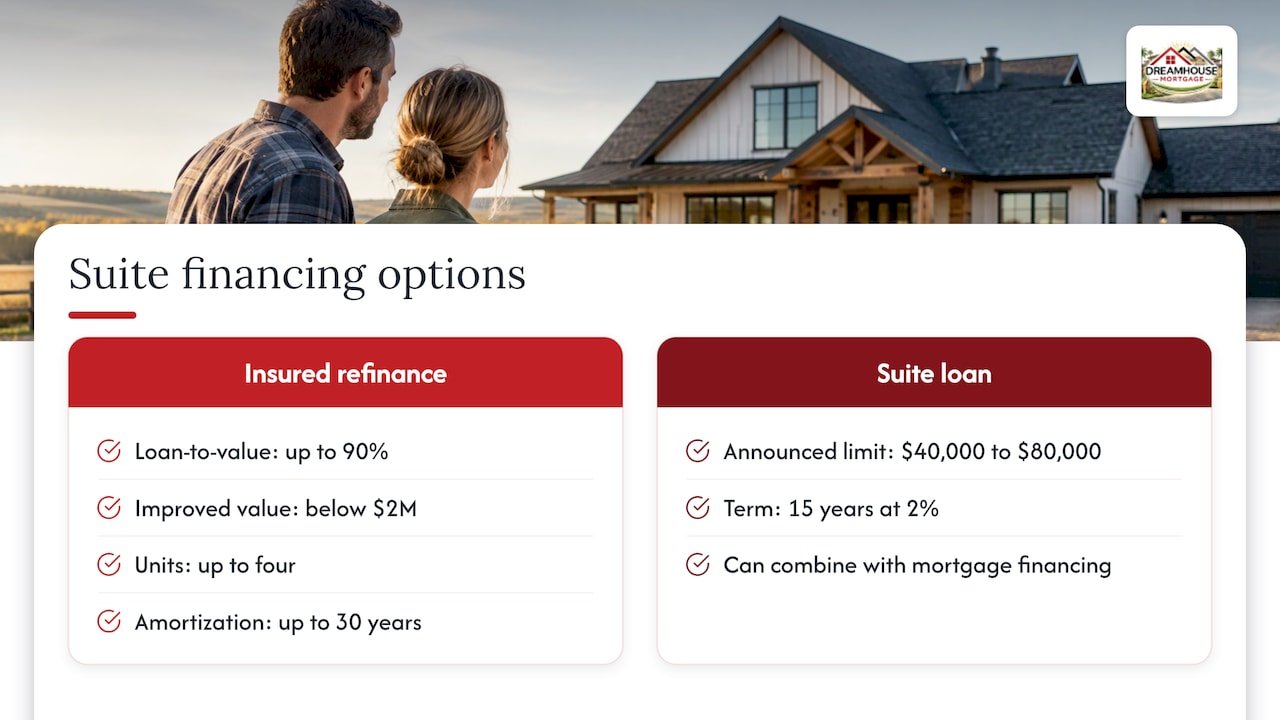
There is also a federal route for homeowners who want to create a suite. Finance Canada’s rule change allows insured refinancing for secondary suites on applications submitted on or after January 15, 2025. It allows up to 90% loan-to-value, requires an as-improved value below $2 million, allows up to four units and up to a 30-year amortization, and limits the financing to project costs. The borrower or a close relative must occupy an existing unit, new units must be self-contained and meet municipal zoning, and they cannot be used as short-term rentals.
Finance Canada also announced in its 2024 Fall Economic Statement that the Canada Secondary Suite Loan Program limit would double from $40,000 to $80,000, with 15-year terms at 2%, and that homeowners would be able to combine it with mortgage financing. Confirm the current program terms on the official Canada.ca page before you plan around it. For renovation-based financing in general, see refinancing for renovations in Alberta.
Step by Step: Financing Your First Rural Property
Step 1: Define the Property You Actually Want
Write down the acreage range, the budget, whether you need a suite and whether any part of the property will be used for income. The answers decide which of the table’s paths you are on. This is where a first call with a broker saves weeks: at DreamHouse Mortgage we work with banks, credit unions, monoline lenders, alternative lenders and private lenders, so the property type can be matched to the lender type before you tour anything.
Step 2: Get Pre-Approved Before You Tour
A pre-approval shows the price range you can carry and the rate you can hold while you shop. Gather your recent pay stubs or Notice of Assessment, employment letter, proof of down payment and ID. Our pre-approval requirements checklist lists them, and the pre-approval process guide shows what happens after you submit them. Remember that a pre-approval is on you; the final approval is also on the property.
Step 3: Test the Numbers
Rural ownership adds costs a city buyer does not see: well and septic maintenance, propane or other heating, snow clearing on a long driveway, and a longer commute. Work them into your budget alongside the mortgage payment, property taxes and insurance. Our guide to mortgage affordability factors for first-time buyers in Alberta walks through the ratios lenders use.
Step 4: Write the Offer With the Right Conditions
Include conditions for financing, appraisal, a well water test (quality and flow), a septic inspection and a property inspection. Ask for land use confirmation from the municipality. Give yourself enough time for the appraisal, since a rural appraiser’s schedule can be longer than in the city.
Step 5: Submit the Full Property File
Your broker sends the lender the purchase contract, the property details (lot size, type, occupancy, units, construction, age), the appraisal and your supporting documents. This is where the work of selecting the lender pays off: sending an acreage to a lender whose policy fits it avoids a late decline.
Step 6: Remove Conditions and Close
Once the lender approves and your conditions are satisfied, your lawyer or notary handles the closing. Keep your down payment funds in place and avoid new credit between approval and possession.
Fixed or Variable on a Country Property
The fixed versus variable choice is the same on an acreage as in the city, and it depends on how steady you need your payment to be. A fixed rate holds for the term. A variable rate moves with the lender’s prime rate, which follows the Bank of Canada’s policy rate announcements, and the Bank publishes its schedule of decisions through the year. Because a rural property often comes with higher fixed costs, many first-time buyers value payment certainty. Compare both options on the day you lock in, not on a rate you saw weeks earlier, because posted rates change often and vary by lender. We compare rates across our lender network as part of the pre-approval.
Self-Employed and Newcomer Buyers in the Country
Many rural buyers around Calgary run their own business, from trades to farming-adjacent services. The FCAC notes that lenders may require a larger down payment from self-employed borrowers. Lenders look at your income documents differently, and some alternative lenders look at the bigger picture. See our self-employed mortgage guide for Alberta for how income is assessed. If you are new to Canada, CMHC’s purchase program describes eligible borrowers as Canadian citizens, permanent residents or legally authorized non-permanent residents, with occupancy conditions. We offer a New To Canada mortgage for buyers in that position.
Our Perspective
Rural files reward preparation. The buyers who have the smoothest time are the ones who decide on the property type, get pre-approved and then ask the questions about water, access, zoning and suites before they write an offer, not after.
We founded DreamHouse Mortgage in 2013 in Calgary and serve buyers in Calgary, Airdrie, Cochrane, Chestermere, Okotoks, High River and Rocky View County. Because we place mortgages with banks, credit unions, monoline lenders, alternative lenders and private lenders, we can look for the lender whose rules fit your acreage instead of fitting your acreage to one lender’s rules.
Our approach is client-first: clear communication, education on how each requirement works and a financing plan that looks past closing day. If you are a first-time buyer eyeing a country home, call us before you book showings.
Guriqbal Chahal, MBA, PMP
Talk to a Calgary-Area Mortgage Broker
DreamHouse Mortgage helps first-time buyers, self-employed professionals, investors and newcomers across Alberta with pre-approvals, purchase mortgages, renewals, refinancing and more. If you are weighing an acreage or a home with a suite, start with our First Time Home Buyer Mortgage Calgary guide or go straight to a mortgage pre-approval in Calgary.

Call Guriqbal Chahal, MBA, PMP, Mortgage Broker, at 403-966-6072. You can also find us on our Google Business Profile.
FAQ
Can a first-time buyer get a mortgage for an acreage in Alberta?
Yes, when the property fits residential lending. A country home on residential-zoned land with potable water and year-round access can qualify for an insured mortgage with as little as 5% down on the first $500,000 of the price. Larger parcels and working farms are reviewed differently and may need a lender with a different policy.
How many acres can an insured mortgage cover?
Under Sagen’s guidelines, the lending value of an acreage is the lesser of the purchase price or the appraised value of the dwelling and 15 acres. Larger parcels are referred for review. Talk to your broker before you choose a parcel above that size.
Can I buy a rural home with a basement suite?
Yes, an owner-occupied home with a suite can fit insured lending when it falls within the eligible unit counts and the suite meets municipal zoning. Confirm that the suite is legal and self-contained, and ask your broker how the lender treats rental income before you rely on it to qualify.
Do I need a bigger down payment for a rural property than a city home?
The federal minimums are the same: 5% up to $500,000, 10% on the portion up to $1.5 million and 20% at $1.5 million or more. A property that does not meet insurer standards, such as a larger parcel or one with commercial use, may need a bigger down payment from the lender. A broker can tell you which category yours is in before you offer.
Should I get pre-approved before I look at acreages?
Yes. A pre-approval sets your price range and holds a rate while you shop. The lender will still review the property itself, including the appraisal, water and zoning, before the final approval.
Sources
- Real Estate Underwriting, Sagen
- How much you need for a down payment, Financial Consumer Agency of Canada
- CMHC Purchase, Canada Mortgage and Housing Corporation
- Mortgage Insurance Rule Changes to Enable Homeowners to Add Secondary Suites, Finance Canada
- 2024 Fall Economic Statement, Finance Canada